The Evolution Of Metabolic Research
Research Disclaimer: The information provided in this technical breakdown is for educational and laboratory research purposes only. GLP-1, GIP, and Glucagon agonists are not intended for human consumption or diagnostic use.
In the landscape of metabolic research, the emergence of Incretin Mimetics has redefined our understanding of glucose regulation and energy homeostasis1. Originally investigated for glycemic control, these compounds have unlocked new pathways in weight management. Understanding the receptor affinity of these peptides is critical for ensuring experimental reproducibility in metabolic studies.
This technical article explores the transition from single-receptor agonists to the emerging class of “Triple G” poly-agonists like Retatrutide.
The Foundation:
GLP-1 Receptor Agonism
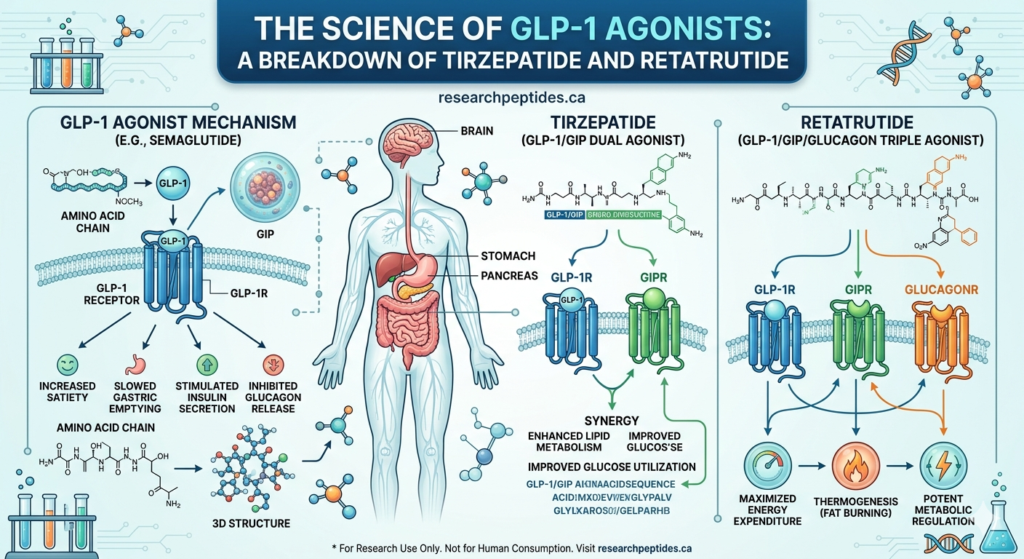
GLP-1 (Glucagon-Like Peptide-1) is a hormone naturally secreted by the L-cells of the intestines. In a research setting, GLP-1 agonists like Semaglutide mimic this hormone to provide three primary signals2:
1. Insulinotropic Action: Stimulates insulin secretion in a glucose-dependent manner.
2. Gastric Regulation: Slows gastric emptying, modulating the rate at which nutrients enter the bloodstream.
3. Hypothalamic Signaling: Acts directly on the brain’s satiety centers to reduce caloric intake.
The Dual-Agonist:
Tirzepatide (GLP-1/GIP)
The evolution of metabolic research led to the discovery of Twincretins. Tirzepatide is the flagship of this class, targeting both the GLP-1 receptor and the GIP (Gastric Inhibitory Polypeptide) receptor3. This dual-action approach is significant because:
1. Synergy in Lipid Metabolism
While GLP-1 focuses heavily on insulin and satiety, GIP is thought to play a larger role in how the body handles adipose tissue. Research suggests that GIP agonism may improve insulin sensitivity within fat cells specifically4.
2. Potency and Tolerability
By splitting the metabolic load across two receptors, researchers have observed that dual agonists like Tirzepatide can often achieve higher weight-loss milestones in models compared to high-dose single GLP-1 agonists3.
The “Triple G” Frontier:
Retatrutide
The most recent breakthrough in the field is Retatrutide. It moves beyond dual agonism to become a tri-agonist, adding a third metabolic pathway: Glucagon5.
1. The Glucagon Advantage:
Unlike the other two pathways, Glucagon agonism increases energy expenditure. By signaling the liver to increase thermogenesis, Retatrutide essentially “revs the engine” while the GLP-1 and GIP components reduce the fuel intake6.
Technical Comparison: Agonist Mechanism Data Sheet
To assist in research selection, the following table breaks down the primary mechanisms of the three leading research peptides in this class:
| Research Peptide | Receptor Mechanism | Primary Metabolic Effect |
|---|---|---|
| Semaglutide | Single (GLP-1 Only) | Satiety & Glucose Control |
| Tirzepatide | Dual (GLP-1 + GIP) | Lipid Clearance & Sensitivity |
| Retatrutide | Triple (GLP-1 + GIP + GCG) | Max Energy Expenditure |
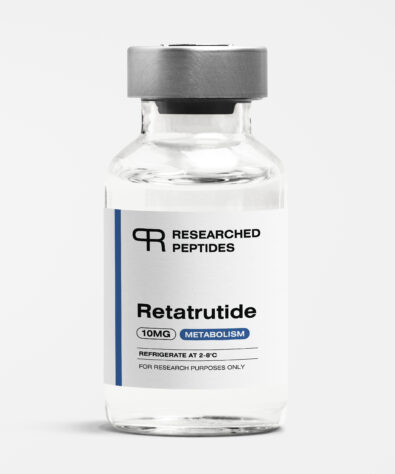
Metabolic Support
Price range: $74.99 through $149.99
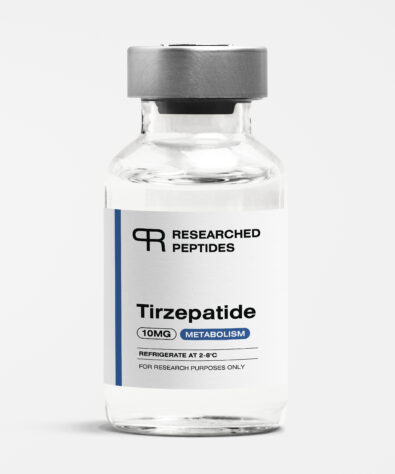
Metabolic Support
Price range: $71.24 through $108.74

Metabolic Support
Price range: $89.99 through $431.96

Research Supplies
Price range: $3.74 through $14.99
GLP-1 Research FAQ
GLP-1 is a type of incretin. Incretins are a group of metabolic hormones that stimulate a decrease in blood glucose levels1. Research focuses on GLP-1 and GIP as the two primary incretins for metabolic study.
Traditional GLP-1s like Semaglutide focus on reducing intake. Glucagon focuses on increasing output. By combining them, Retatrutide addresses both sides of the energy balance equation simultaneously5.
Summary
The evolution from GLP-1 to the “Triple G” agonists represents a move toward high-precision metabolic intervention. For researchers, understanding these pathways is essential for selecting the correct peptide for specific energy-balance studies. Maintaining strict cold-chain protocols remains vital to ensure these complex amino acid chains remain bioactive.
For more technical data and high-purity sequences, view our full research collection.
References
- Nauck, M. A., & Meier, J. J. (2018). Incretin hormones: Their role in health and disease. Diabetes, Obesity and Metabolism, 20(S1), 5-21.
- Müller, T. D., et al. (2019). Glucagon-like peptide-1 (GLP-1). Molecular Metabolism, 30, 72-130.
- Frias, J. P., et al. (2021). Tirzepatide versus semaglutide once weekly in patients with type 2 diabetes. New England Journal of Medicine, 385(6), 503-515.
- Samms, R. J., Coghlan, M. P., & Sloop, K. W. (2020). How May GIP Receptor Agonism Benefit the Treatment of Type 2 Diabetes and Obesity? Trends in Endocrinology & Metabolism, 31(6), 410-421.
- Jall, S., et al. (2017). Monomeric GLP-1/GIP/glucagon triagonism corrects obesity, hepatosteatosis, and dyslipidemia in DIO mice. Molecular Metabolism, 6(5), 440-446.
- Jendle, J., et al. (2024). Retatrutide (LY3437943), a triple GIP, GLP-1, and glucagon receptor agonist: Metabolic breakthroughs in obesity and type 2 diabetes research. The Lancet Diabetes & Endocrinology.