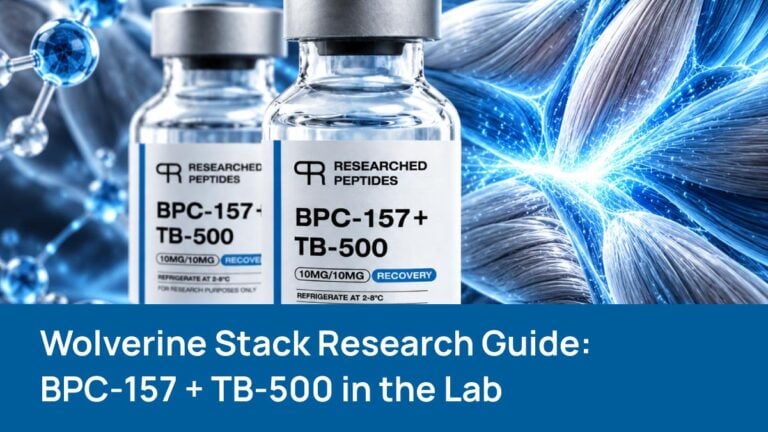
In the field of regenerative biochemistry, investigating the mechanisms that drive structural cellular migration remains a foundational objective. Cellular migration and rapid extracellular matrix rebuilding are often restricted by the physical rigidity of the cellular cytoskeleton under stress. To address this biological bottleneck, contemporary laboratory trials exploring actin dynamics and advanced capillary growth vectors are prioritizing TB-500 Canada research models to analyze the tissue-remodeling properties of this synthetic peptide sequence.
This comprehensive technical guide outlines the precise molecular characteristics of Thymosin Beta-4 analogs, explains its role in cytoskeletal fluidity, details accurate volumetric preparation configurations, and defines key handling standards needed to preserve data integrity across multi-phase laboratory evaluations.
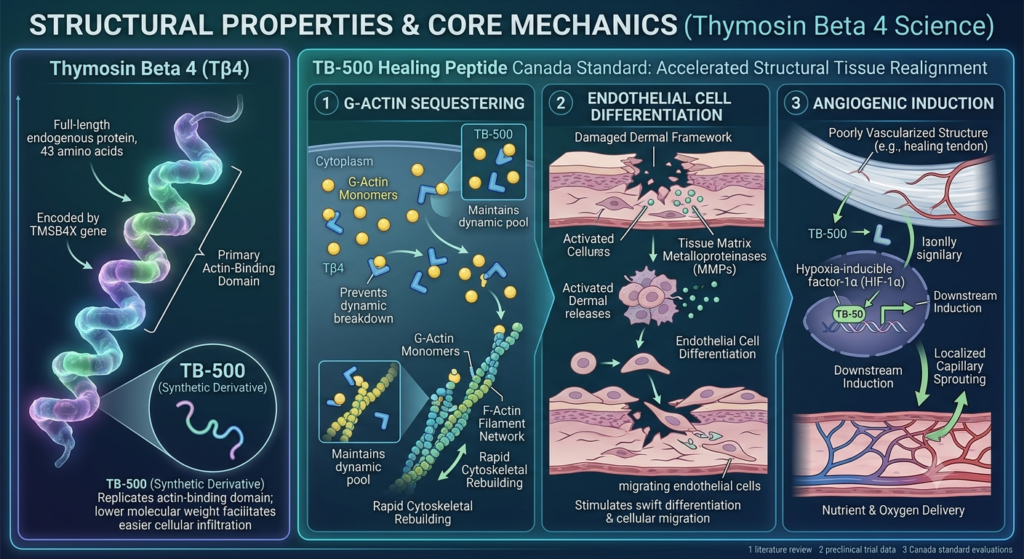
Structural Properties & Core Mechanics (Thymosin Beta 4 Science)
When reviewing modern Thymosin Beta 4 research data, literature indicates that the full-length endogenous protein is composed of 43 amino acids encoded directly by the TMSB4X gene1. In preclinical trial frameworks, investigators frequently utilize the specialized synthetic derivative known as TB-500, which replicates the primary actin-binding domain of the parent molecule to offer a lower molecular weight that facilitates easier cellular infiltration2.
Preclinical models evaluating the TB-500 healing peptide Canada standard reveal that the complex works via targeted intracellular mechanisms to accelerate structural tissue realignment3:
- G-Actin Sequestering: It stands as a major cellular G-actin sequestering molecule, binding to monomeric actin subunits to maintain a dynamic pool available for rapid cytoskeletal rebuilding1.
- Endothelial Cell Differentiation: It actively triggers tissue matrix metalloproteinases, stimulating swift endothelial cell differentiation and cellular migration across damaged dermal frameworks1.
- Angiogenic Induction: It encourages localized capillary sprouting via downstream induction of hypoxia-inducible factor-1α (HIF-1α) signaling, increasing nutrient delivery to poorly vascularized structures3.
Check Out Our Premium Products!
Tissue Repair & Recovery
Price range: $41.24 through $71.24
Research Supplies
Price range: $3.74 through $14.99
Cytoskeletal Remodeling and Endothelial Cell Migration
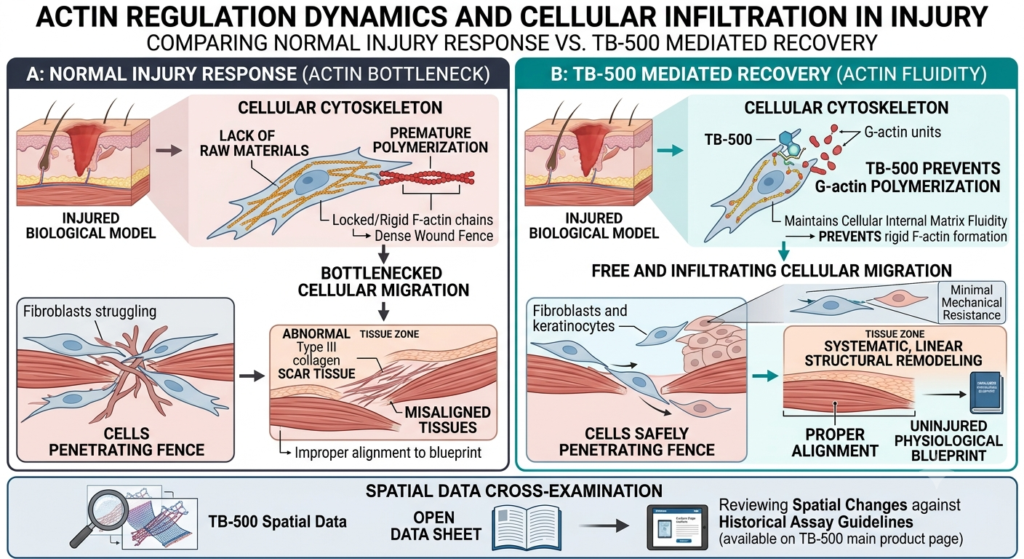
The distinctive property of this compound lies in its direct modulation of internal cellular architecture. During soft tissue injury, standard cellular migration is typically halted because actin filaments polymerize prematurely into rigid structures, locking cells in place. By binding directly to monomeric G-actin, the peptide inhibits this rigid polymerization process, keeping the cytoplasm flexible and enabling fibroblasts to travel freely into damaged matrices without encountering structural resistance1,3.
This enhanced mobility helps ensure that newly migrating cells organize uniformly across the extracellular space, reducing the chaotic development of unaligned fibrotic tissue matrices. As a result, experimental tissue repair folds into a highly structured, linear pattern that preserves the baseline mechanical properties of the target tissue3. Researchers managing these spatial assays frequently cross-examine concentration variables against technical standards outlined on the official TB-500 product page.
Calibrating Volumetric Dilutions for Preclinical Assays
To avoid baseline data drift and ensure tight experimental control, exact calculation of liquid concentrations is mandatory. Minor errors in fluid introduction can significantly alter cellular responses across sample groups; therefore, establishing a uniform preparation framework is a necessary prerequisite for any formal study design.
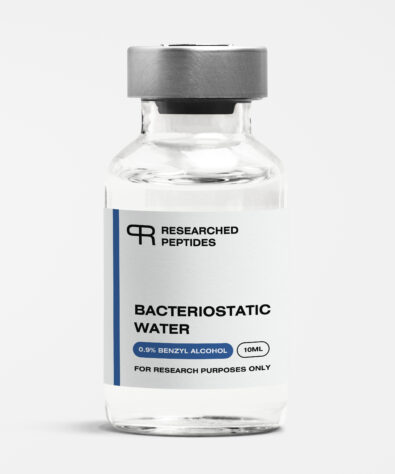
Lyophilized peptide cakes must be carefully brought to a liquid state using an appropriate sterile diluent. For extended observational studies, the industry standard is Bacteriostatic Water (0.9% Benzyl Alcohol), which provides an effective anti-microbial barrier to inhibit bacterial growth over multi-week testing cycles. The table below provides a comprehensive breakdown of concentration mapping within a baseline 5mg lyophilized vial structure:
| Vial Total (Mass) | Reconstitution Liquid Volume | Resulting Core Concentration | Standard Micro-Dose Aliquot |
|---|---|---|---|
| 5 mg (5,000 mcg) | 1.0 mL | 5,000 mcg / mL | 250 mcg per 0.05 mL unit |
| 5 mg (5,000 mcg) | 2.0 mL | 2,500 mcg / mL | 250 mcg per 0.10 mL unit |
| 5 mg (5,000 mcg) | 2.5 mL | 2,000 mcg / mL | 250 mcg per 0.125 mL unit |
Stringent Quality Benchmarks and Batch Verification
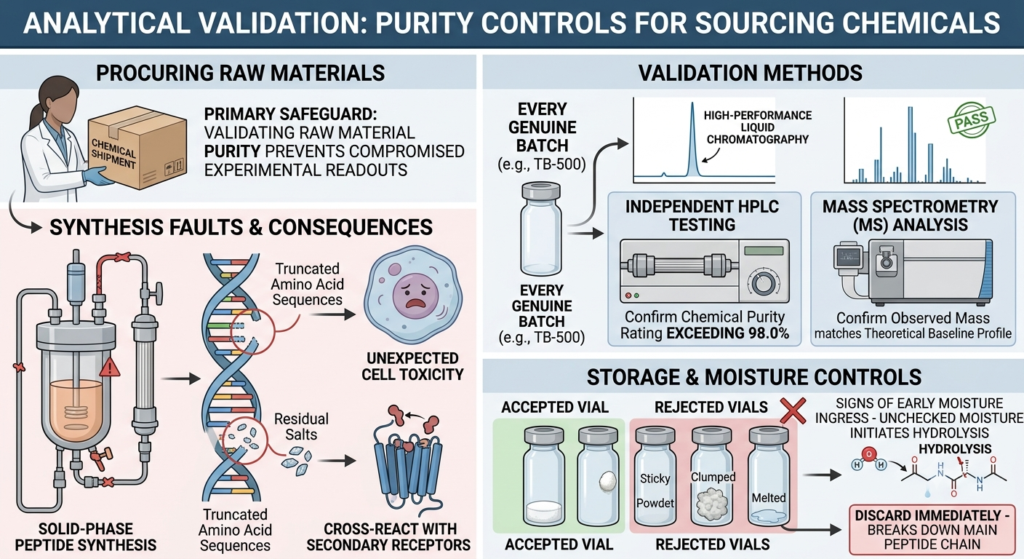
When selecting chemical compounds for scientific evaluation, independent material verification serves as the ultimate safeguard against corrupted trial data. Unregulated or flawed solid-phase synthesis can lead to incomplete peptide sequences or the presence of leftover reagents, which can induce severe cell toxicity or create erratic cross-reactions across control groups.
Every genuine batch of TB-500 must be validated by independent testing using High-Performance Liquid Chromatography (HPLC) to confirm a chemical purity rating exceeding 98.0%. Simultaneously, Mass Spectrometry (MS) analysis should be used to confirm that the observed mass matches the theoretical baseline profile of the molecule. Vials that reveal signs of early moisture ingress—such as a sticky, clumped, or melted appearance of the dry powder pellet—should be discarded immediately, as unchecked moisture initiates hydrolysis and breaks down the main peptide chain.
Environmental Controls & Laboratory Maintenance Protocols
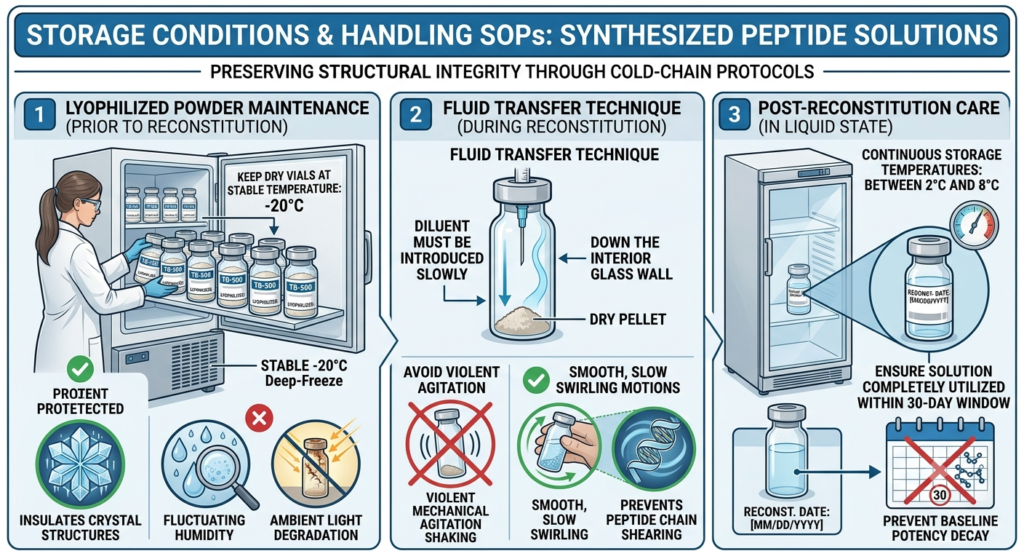
Preserving the foundational structural integrity of synthesized peptide solutions requires strict, continuous adherence to established cold-chain protocols to prevent enzymatic degradation or unintended unfolding:
- Lyophilized Powder Maintenance: Prior to reconstitution, dry chemical vials should be held at a stable temperature of -20°C. Keeping the vials deep-frozen insulates the crystal structures from fluctuating humidity levels and ambient light degradation.
- Fluid Transfer Technique: During fluid introduction, the diluent must be introduced slowly down the interior glass wall of the vial. Violent mechanical agitation should be completely avoided; instead, use smooth, slow swirling motions to transition the lyophilized pellet into solution without shearing the peptide chain.
- Post-Reconstitution Care: Once in liquid state, the solution must be continuously stored at temperatures between 2°C and 8°C. Experimental protocols should ensure the solution is completely utilized within a 30-day window to prevent baseline potency decay.
Summary: Future Directives in Actin-Sequestering Studies
While empirical anecdotal feedback in private forums frequently highlights the efficiency of TB-500 in tissue repair models, human clinical testing remains strictly outside current scientific parameters. The preclinical evidence compiled in animal models, however, offers a highly dependable, reproducible dataset demonstrating accelerated soft tissue remodeling, localized capillary formation, and cellular matrix organization. For development teams pushing the boundaries of regenerative bio-engineering, strict control over sourcing validation, reconstitution math, and cold storage settings is critical to obtaining authoritative, peer-review-quality research outcomes.
Tissue Repair & Recovery
Price range: $41.24 through $71.24
Research Supplies
Price range: $3.74 through $14.99
References
- Goldstein, A. L., Hannappel, E., & Kleinman, H. K. (2012). Thymosin β4: Actin-sequestering protein coupled to tissue repair, regeneration and anti-inflammation. World Journal of Biological Chemistry, 3(1), 8-14. https://doi.org/10.4331/wjbc.v3.i1.8
- Philp, D., et al. (2003). Thymosin β4 and a synthetic peptide fragment promote dermal wound repair. FASEB Journal, 17(14), 2103-2105. https://doi.org/10.1096/fj.03-0115fje
- Smart, N., et al. (2007). Thymosin β4 induces adult cardiomyocyte progenitor cell activation and neovascularization. Nature, 445(7124), 177-182. https://doi.org/10.1038/nature05308