Free Xpresspost Shipping Over $199

25% Off
Fall Sale

Tissue Repair & Recovery
(5) Original price was: $169.99.$169.99Current price is: $169.99. $127.49
25% Off
Fall Sale
Tissue Repair & Recovery
(13) Price range: $54.99 through $94.99
Price range: $41.24 through $71.24
This product has multiple variants. The options may be chosen on the product page Price range: $41.24 through $71.24
25% Off
Fall Sale
Tissue Repair & Recovery
(10) Price range: $54.99 through $94.99
Price range: $41.24 through $71.24
This product has multiple variants. The options may be chosen on the product page Price range: $41.24 through $71.24
25% Off
Fall Sale
Longevity & Vitality
(5) $189.99
$142.49
This product has multiple variants. The options may be chosen on the product page $142.49
25% Off
Fall Sale
Longevity & Vitality
(1) $179.99
$134.99
This product has multiple variants. The options may be chosen on the product page $134.99
25% Off
Fall Sale
Longevity & Vitality
(2) $119.99
$89.99
This product has multiple variants. The options may be chosen on the product page $89.99
Technical Appendix: Regenerative Mechanisms & Tissue Recovery
The study of regenerative medicine focuses on the endogenous signaling pathways responsible for the structural repair of connective tissues, endothelium, and musculature. Our specialized tissue repair peptides and cellular coenzymes provide high-purity reference analogs designed to investigate the acceleration of natural healing processes, extracellular matrix remodeling, and metabolic rejuvenation through targeted biochemical pathways.
1. BPC-157 and Angiogenic Signaling
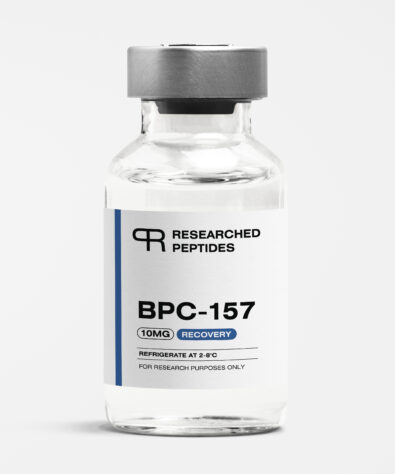
BPC-157 (Body Protection Compound 157) is a pentadecapeptide heavily researched for its organoprotective and cytoprotective properties. In laboratory models, studies focus on its ability to modulate the expression of Growth Factors—specifically Vascular Endothelial Growth Factor (VEGF)—to induce angiogenesis, the formation of new capillary blood vessels. This localized micro-vascularization pathway is critical for investigating the repair of poorly vascularized dense structures, including tendons, ligaments, and gastrointestinal epithelium. Our reference materials are batch-verified to guarantee the precise amino acid sequence required for these biological observations.
2. TB-500 and Actin-Mediated Cellular Migration
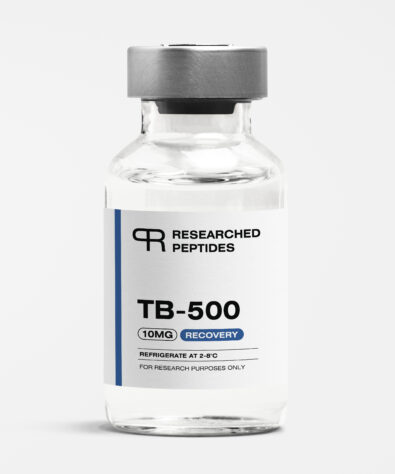
TB-500 is a short synthetic fragment of the naturally occurring protein Thymosin Beta-4. The primary investigative focus of this peptide is its role in actin sequestration, which facilitates cellular mobility, migration, and tissue remodeling at the site of a structural disruption. Because of its low molecular weight, TB-500 exhibits high systemic mobility in research models, making it a key compound for studying the recovery of cardiac tissue, skeletal muscle, and corneal inflammation frameworks.
3. Cellular Coenzymes & Advanced Longevity Formulations: KLOW, GLOW, and NAD+
Modern regenerative research expanding into systemic cellular repair frequently evaluates the metabolic foundations of aging and tissue degradation. To address this, our selection incorporates advanced cellular health compounds:
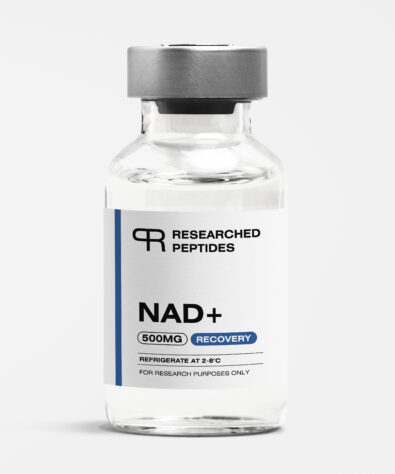
- NAD+ (Nicotinamide Adenine Dinucleotide): A critical metabolic coenzyme required for mitochondrial electron transport and cellular energy production. Researchers analyze NAD+ to study the activation of sirtuins and the execution of PARP-mediated DNA repair pathways, which directly influence cellular longevity and age-related tissue degradation.
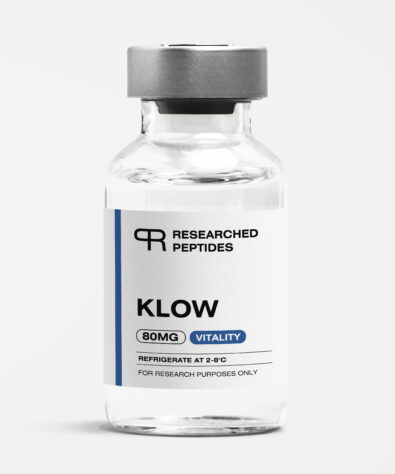
- KLOW: A targeted research formulation engineered to investigate pathways related to cellular senescence, longevity signaling cascades, and the regulation of endogenous structural integrity over longitudinal timelines.
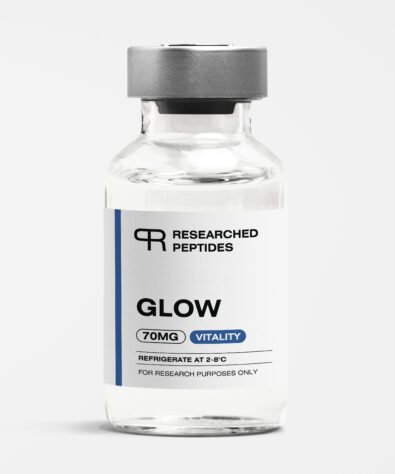
- GLOW: An analytical blend designed to evaluate the physiological pathways governing extracellular matrix restoration, systemic vitality indicators, and cellular repair mechanics.
4. Multi-Layered Synergy & Lyophilized Stability Protocols
Investigators frequently design multi-layered protocols exploring the dual or compound application of structural tissue repair peptides alongside metabolic regulators like BPC-157, TB-500, KLOW, GLOW, and NAD+. These studies aim to contrast localized physical matrix remodeling (via angiogenic and actin pathways) with systemic cellular energy restoration. To prevent oxidation, degradation, or premature amino acid cleavage, all reference vials are strictly lyophilized (freeze-dried) and vacuum-sealed under inert conditions, securing consistent, predictable baselines across your laboratory studies.