Free Xpresspost Shipping Over $199

25% Off
Fall Sale
Longevity & Vitality
(6) $59.99
$44.99
This product has multiple variants. The options may be chosen on the product page $44.99
25% Off
Fall Sale
Longevity & Vitality
(5) $189.99
$142.49
This product has multiple variants. The options may be chosen on the product page $142.49
25% Off
Fall Sale
Longevity & Vitality
(1) $179.99
$134.99
This product has multiple variants. The options may be chosen on the product page $134.99
25% Off
Fall Sale
Longevity & Vitality
(1) $54.99
$41.24
This product has multiple variants. The options may be chosen on the product page $41.24
25% Off
Fall Sale
Longevity & Vitality
(2) $119.99
$89.99
This product has multiple variants. The options may be chosen on the product page $89.99
Technical Appendix: Geroscience & Cellular Vitality
The study of longevity focuses on the mechanisms of cellular senescence, chromatin stability, and the identification of biological markers of aging. Our premium longevity research peptides series provides researchers with high-purity analogs and nucleotide coenzymes to investigate cellular rejuvenation, dermal matrix integrity, and the mitigation of age-related systemic decline in laboratory models.
1. Advanced Longevity Formulations & Coenzymes: KLOW, GLOW, and NAD+
Modern geroscience expanding into systemic anti-aging mechanisms frequently prioritizes the mitigation of cellular senescence and the upkeep of mitochondrial efficiency. Our catalog provides distinct reference tools to evaluate these pathways:
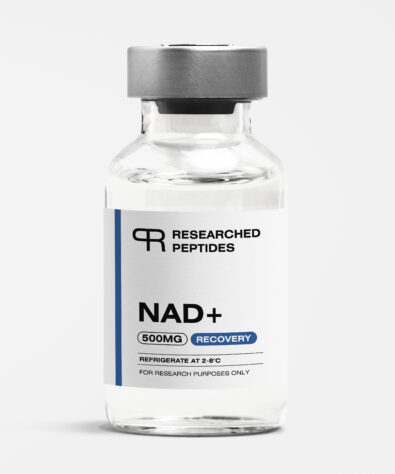
- NAD+ (Nicotinamide Adenine Dinucleotide): A fundamental cellular coenzyme mandatory for mitochondrial electron transport and optimal ATP production. Researchers utilize NAD+ to observe the activation of sirtuins (SIRT1-7) and the regulation of PARP-dependent DNA repair pathways.
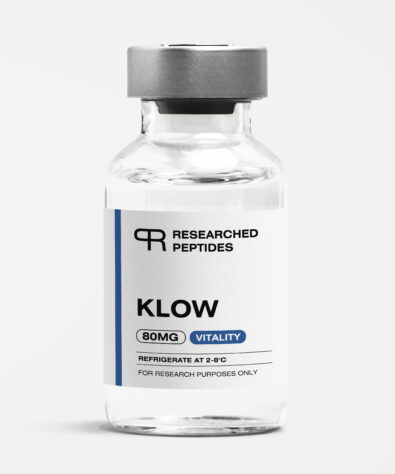
- KLOW: A targeted research formulation developed to investigate cellular signaling cascades linked to senescence suppression and systemic longevity pathways.
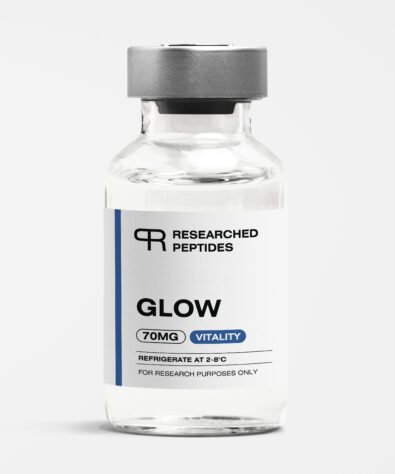
- GLOW: An analytical blend engineered to evaluate extracellular matrix integrity, microvascular tone, and fundamental tissue rejuvenation markers.
2. GHK-Cu and the Copper-Peptide Complex
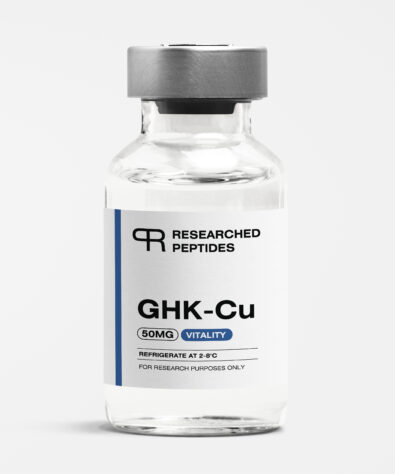
GHK-Cu (Glycyl-L-histidyle-L-lysine) is a naturally occurring tripeptide with a profound binding affinity for copper ions. Technical studies on this complex focus on its role as a powerful regenerative signaling molecule. In vitro observations analyze its capacity to stimulate localized collagen and elastin synthesis, facilitate base-excision DNA repair, and reset specific gene distributions to a more youthful expression baseline. Because GHK-Cu is highly hygroscopic, maintaining these longevity research peptides in a vacuum-sealed, lyophilized state is mandatory to prevent atmospheric humidity from degrading the sequence structure before laboratory reconstitution.
3. Melanotan II and Melanocortin Receptor Signaling
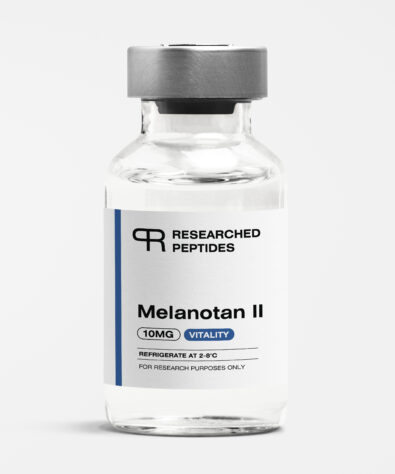
Melanotan II is a non-selective synthetic agonist of the central and peripheral melanocortin receptors (MC1R through MC5R). While heavily studied for its regulatory control over melanogenesis (pigmentation signaling), advanced research also evaluates its interactions with energy homeostasis, lipid metabolism, and central neuroprotective pathways. By evaluating the MC4R pathway, investigators can observe the peptide’s direct influence on metabolic efficiency and neuroinflammatory signaling profiles.
4. Epigenetic Regulation & Quality Control Frameworks
A central objective in longevity science is understanding how exogenous compounds can alter the extracellular matrix (ECM) and reverse cellular degradation timelines. Evaluating multi-tiered interactions by combining traditional sequences with targeted cellular modifiers—such as KLOW, GLOW, NAD+, GHK-Cu, and Melanotan II—allows investigators to analyze compounding anti-aging metrics. Maintaining rigorous domestic cold-chain logistics from our Vancouver lab safeguards these delicate longevity research peptides against thermal structural degradation, ensuring entirely predictable baselines for your data collection.