In the domain of preclinical extracellular matrix (ECM) remodeling and cellular longevity research, the modulation of structural proteins and tissue repair cascades remains a highly complex focus. Traditional biochemical models often struggle to safely manage the delicate balance between systemic tissue breakdown and organized cellular repair. Recently, laboratory investigators exploring advanced cellular signaling pathways have oriented their research toward GHK-Cu research Canada models, aiming to evaluate how this naturally occurring tripeptide-copper complex interacts with gene expression profiles to drive tissue regeneration.
This technical guide evaluates the primary biochemical mechanisms of GHK-Cu, analyzes its multi-axis role in cellular longevity, maps precise laboratory reconstitution metrics for standard testing layouts, and outlines critical handling benchmarks required for experimental validity.
GHK-Cu Structure & Copper Peptide Science Mechanisms
GHK-Cu is a naturally occurring tripeptide complex composed of glycyl-L-histidyl-L-lysine bound to a copper (II) ion1. Discovered originally in human plasma fractions, this complex has a molecular formula of C14H22CuN6O4 and features an exceptional binding affinity for copper, which is a vital cofactor in several fundamental enzymatic reactions2. Its uncomplexed tripeptide baseline features a molecular weight of 340.38 Da.
In vitro assays focusing on copper peptide longevity parameters show that GHK-Cu serves as a major signal peptide, triggering extensive cellular remodeling pathways:
- Collagen and Elastin Stimulation: It interacts directly with fibroblasts to up-regulate the synthesis of collagen type I, collagen type III, and elastin fibers, effectively restructuring the extracellular matrix network1.
- Glycosaminoglycan Upregulation: It significantly promotes the synthesis of total glycosaminoglycans (GAGs), including decorin and hyaluronic acid, enhancing cellular matrix hydration and elasticity metrics2.
- Metalloproteinase Balancing: It actively balances the ratio of matrix metalloproteinases (MMPs) to tissue inhibitors of metalloproteinases (TIMPs), facilitating orderly structural remodeling without allowing unchecked tissue degradation3.
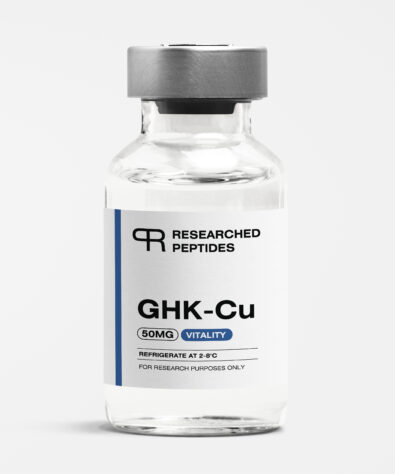
Longevity & Vitality
$44.99
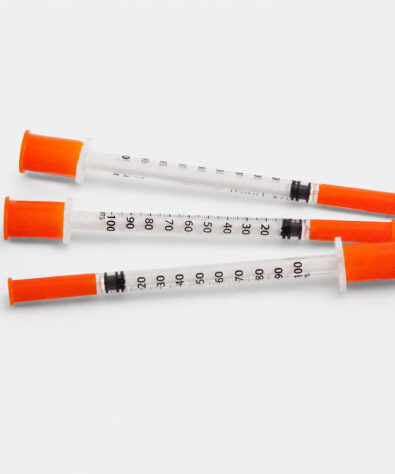
Research Supplies
Price range: $3.74 through $14.99
Genomic Regulation & Skin Repair Peptide Vectors
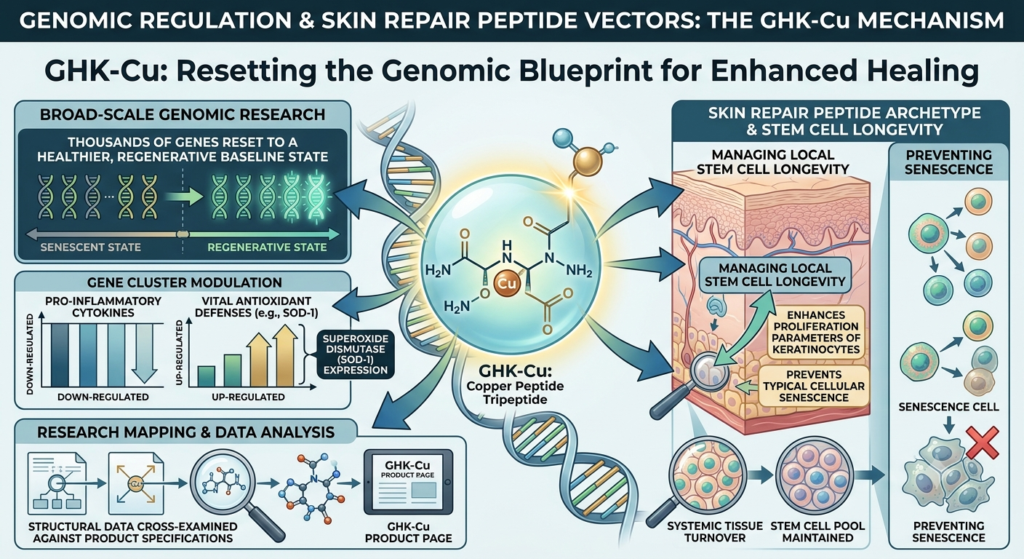
The fundamental mechanism that sets GHK-Cu apart from generic signaling sequences is its profound capacity to alter human gene expression profiles. Broad-scale genomic research indicates that the tripeptide can reset thousands of distinct genes to a healthier, more regenerative baseline state3. By modulating structural and protective gene clusters, it down-regulates pro-inflammatory cytokines while simultaneously up-regulating vital antioxidant defense mechanisms, such as superoxide dismutase (SOD-1) expression1,3.
Furthermore, as a specialized skin repair peptide archetype, GHK-Cu plays a dual role in managing local stem cell longevity. It enhances the proliferation parameters of basal keratinocytes, allowing for systemic tissue turnover while preventing the typical cellular senescence that stalls tissue validation assays2. For research groups mapping these gene expression shifts, structural data is often cross-examined against standard specifications outlined on the main GHK-Cu product page.
Reconstitution & Preparation Metrics for GHK-Cu 50mg Vials
To preserve tight experimental control and ensure data reproducibility across repetitive assay models, meticulous preparation protocols are critical. Subtle shifts in target concentrations can introduce unwanted baseline drift in cellular responses, meaning that establishing a precise, standardized preparation protocol is a mandatory prerequisite for any formal study design.
Lyophilized peptide cakes must be carefully brought to a liquid state using an appropriate sterile diluent. For extended observational studies, the industry standard is Bacteriostatic Water (0.9% Benzyl Alcohol), which provides an effective anti-microbial barrier to inhibit bacterial growth over multi-week testing cycles. The table below outlines standard concentration configurations for a high-mass baseline GHK-Cu 50mg lyophilized vial layout:
| Vial Total (Mass) | Reconstitution Liquid Volume | Resulting Core Concentration | Standard Micro-Dose Aliquot |
|---|---|---|---|
| 50 mg (50,000 mcg) | 2.0 mL | 25,000 mcg / mL | 2,500 mcg per 0.10 mL unit |
| 50 mg (50,000 mcg) | 4.0 mL | 12,500 mcg / mL | 1,250 mcg per 0.10 mL unit |
| 50 mg (50,000 mcg) | 5.0 mL | 10,000 mcg / mL | 1,000 mcg per 0.10 mL unit |
HPLC & Chelation Quality Controls for GHK-Cu Sourcing
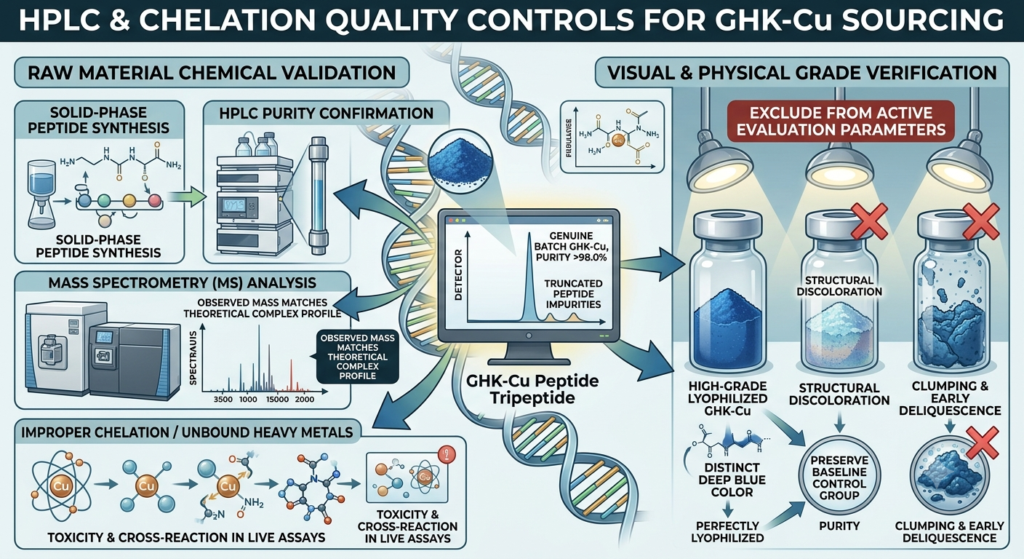
When domestic research bodies arrange to purchase chemical materials for multi-phase tissue validation assays, verifying raw material purity represents the primary safeguard against compromised experimental readouts. Minor faults during solid-phase peptide synthesis or erratic copper chelation processing can yield unbound heavy metal elements or truncated amino acid sequences, which can induce unexpected cell toxicity or cross-react with secondary receptors in live assays.
Every genuine batch of GHK-Cu must be validated by independent testing using High-Performance Liquid Chromatography (HPLC) to confirm a chemical purity rating exceeding 98.0%. Simultaneously, Mass Spectrometry (MS) analysis should be used to confirm that the observed mass matches the theoretical profile of the copper-complexed structure. High-grade lyophilized GHK-Cu presents a distinct, deep blue coloration when properly chelated with copper; vials displaying structural discoloration, clumping, or visual signs of early deliquescence must be excluded from active evaluation parameters to preserve baseline control group purity.
Storage Protocol & Copper Complex Handling Guidelines
Maintaining the structural stability and binding efficiency of copper-chelating tripeptides requires specialized handling to protect against oxidation and sequence dissociation:
- Freeze-Dried Cake Preservation: Un-reconstituted GHK-Cu vials must be stored in a dry, dark freezer at -20°C. Storing dry vials at sub-zero temperatures prevents atmospheric moisture absorption and preserves copper ion coordination within the peptide matrix.
- Reconstitution Dynamics: Introduce sterile Bacteriostatic Water slowly down the inner glass wall. Allow the blue lyophilized powder to dissolve naturally through gentle rotation—avoid rapid shaking, which can create micro-foam and destabilize the copper-bound structure.
- Post-Dilution Refrigeration: Reconstituted liquid GHK-Cu should be stored constantly at 2°C to 8°C. To avoid baseline potency loss or color change, complete all experimental sampling within 30 days of fluid introduction.
Summary: Preclinical Applications in Cellular & Tissue Repair
Research into GHK-Cu highlights its unique ability to serve as a natural copper-binding tripeptide that directly modulates extracellular matrix remodeling and tissue repair pathways. Preclinical studies demonstrate that GHK-Cu upregulates gene expression associated with collagen synthesis, glycosaminoglycan production, and localized angiogenesis. To ensure high-precision results in dermatological and tissue repair assays, research laboratories must prioritize verified sequence purity via HPLC/MS, protect copper-bound complexes from oxidative damage, and maintain precise volumetric control during reconstitution.
Longevity & Vitality
$44.99
Research Supplies
Price range: $3.74 through $14.99
References
1. Pickart, L., Vasquez-Soltero, J. M., & Margolina, A. (2015). GHK peptide as a natural modulator of multiple cellular pathways in skin regeneration. BioMed Research International, 2015, 648108. https://doi.org/10.1155/2015/648108
2. Pickart, L., & Margolina, A. (2018). Regenerative and protective actions of the GHK-Cu peptide in the light of the new gene data. International Journal of Molecular Sciences, 19(7), 1987. https://doi.org/10.3390/ijms19071987
3. Campbell, J. D., et al. (2014). The human tripeptide GHK-Cu resets genomic expression to a healthier, younger state: A gene review of cellular matrix remodeling. Journal of Biomaterials and Tissue Engineering, 4(12), 1012-1021.