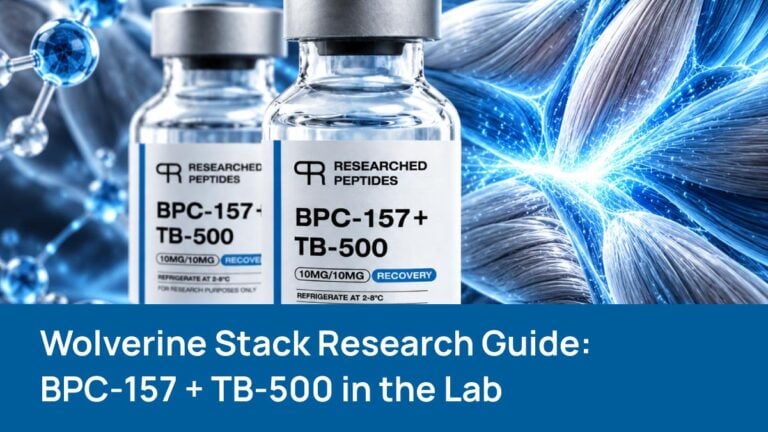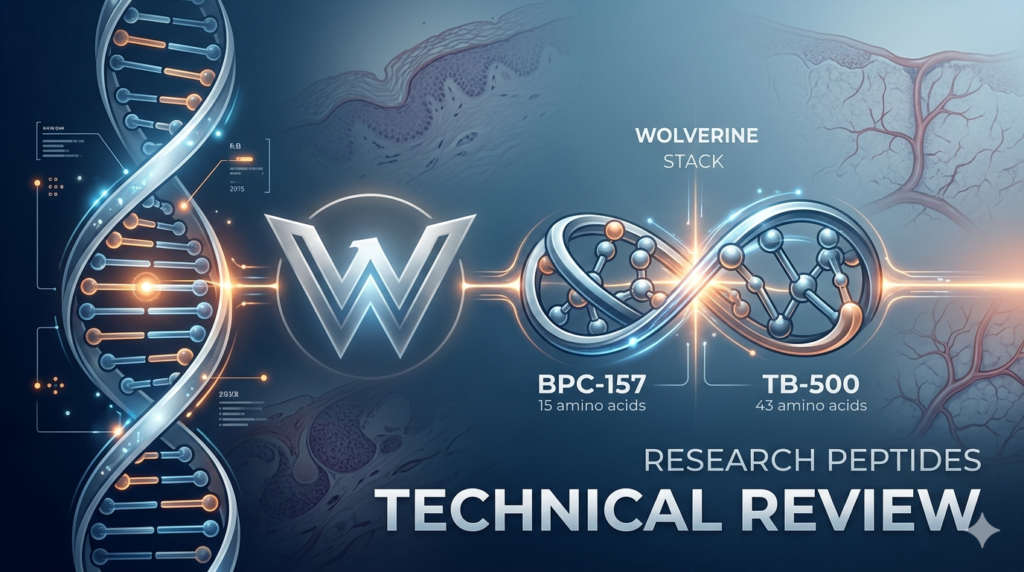
In the domain of preclinical musculoskeletal research, accelerating tissue repair remains a high-priority challenge. Conventional recovery intervals for connective tissues are heavily restricted by poor vascularization and complex cellular signaling cascades. Recently, investigators have focused heavily on the co-administration of two distinct regenerative agents—Body Protection Compound 157 (BPC-157) and Thymosin Beta-4 (TB-500)—frequently referred to in literature as the “Wolverine Stack”1.
This technical review evaluates the distinct biochemical mechanisms of both compounds and analyzes the scientific rationale behind their hypothetical synergistic effects on tendon, ligament, muscle, and vascular tissue repair.
The Molecular Profile of BPC-157
BPC-157 is a synthetic pentadecapeptide composed of 15 amino acids derived from a naturally occurring protective partial sequence found in human gastric juice. Its molecular formula is expressed as C62H98N16O22 with a molecular weight of 1419.54 Da2.
Preclinical trials consistently demonstrate that BPC-157 modulates several key pathways crucial to wound healing:
- Up-regulation of VEGFR2: It accelerates angiogenesis (the formation of new blood vessels) by up-regulating Vascular Endothelial Growth Factor Receptor 2 (VEGFR2), establishing a dynamic vascular bypass to ischemic tissues3.
- Fibroblast Migration: It significantly promotes the activation, migration, and spreading of tendon fibroblasts, which are the main cellular components responsible for synthesizing collagen type I4.
- F-Actin Stabilization: At a cellular level, it influences the formation of focal adhesions by stabilizing F-actin proteins, crucial for structural cellular integrity during migration5.
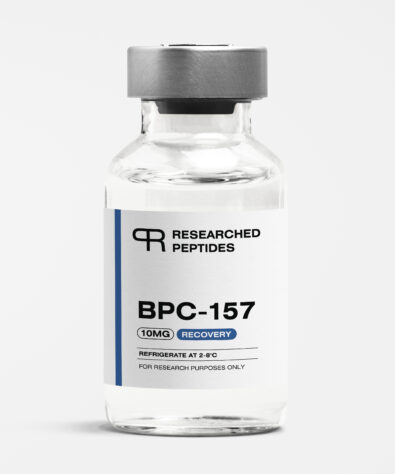
Tissue Repair & Recovery
Price range: $41.24 through $71.24
Research Supplies
Price range: $3.74 through $14.99

Tissue Repair & Recovery
The Molecular Profile of TB-500 (Thymosin Beta-4)
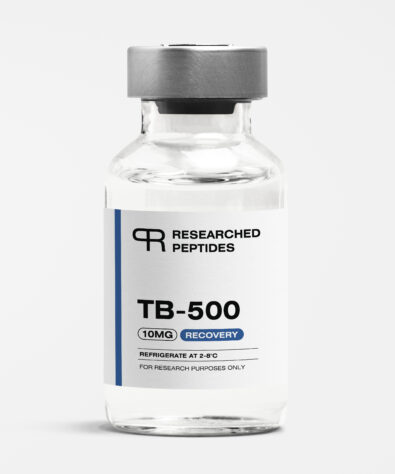
While often labeled interchangeably in commercial research environments, TB-500 is typically a synthetic short-chain fragment or full-length analogue of Thymosin Beta-4, a naturally occurring protein consisting of 43 amino acids encoded by the TMSB4X gene. Its molecular weight stands at 4963.44 Da6.
The primary function of Thymosin Beta-4 revolves around its role as the primary actin-sequestering molecule in eukaryotic cells:
- G-Actin Sequestering: It binds to monomeric G-actin, preventing its polymerization into F-actin, maintaining a pool of actin monomers available for rapid remodeling of the cellular cytoskeleton6.
- Endothelial Cell Differentiation: It triggers matrix metalloproteinases, stimulating endothelial cell differentiation and keratinocyte migration, which is crucial for structural tissue remodeling and dermal repair7.
Tissue Repair & Recovery
Price range: $41.24 through $71.24
Research Supplies
Price range: $3.74 through $14.99
Tissue Repair & Recovery
The Synergistic Rationale: Overlapping vs. Complementary Pathways
When evaluated as a combined stack, BPC-157 and TB-500 target different biological phases of tissue repair. BPC-157 provides immediate localized structural stabilization and promotes early-stage growth factor expression at the site of injury. Concurrently, TB-500 acts on a broader systemic scale to drive cellular motility, permitting newly differentiated cells to infiltrate the matrix fence built by BPC-157.
The table below presents a comparative breakdown of their individual specifications and how they intersect within experimental models:
| Parameter | BPC 157 Specifications | TB 500 Specifications |
|---|---|---|
| Peptide Length | 15 Amino Acids (Pentadecapeptide) | 43 Amino Acids (Full-length protein/analogue) |
| Primary Target Area | Localized focal adhesions, gastric mucosa, tendon-to-bone zones | Systemic cellular cytoskeleton, actin filaments, endothelial tissues |
| Angiogenesis Vector | Up-regulation of VEGFR2 pathway activation | Downstream induction of hypoxia-inducible factor-1α (HIF-1α) |
| Primary Action Mode | Stabilization of F-actin complexes | Sequestering of monomeric G-actin units |
Preclinical Injury Recovery Data
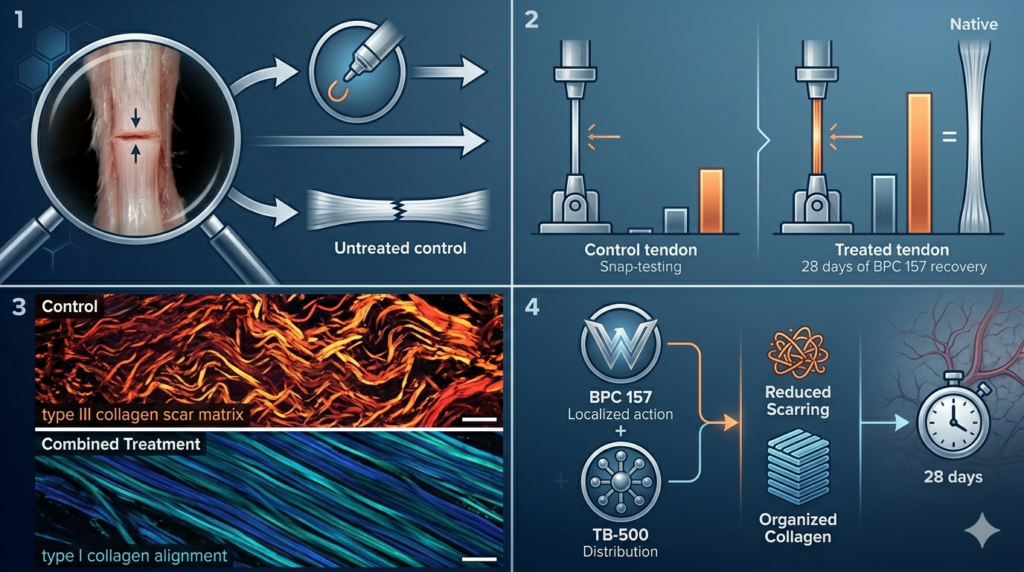
Literature points to multiple in vivo rodent trials assessing injury healing velocity when these pathways are optimized. For instance, in models simulating total Achilles tendon transaction, BPC-157 administration resulted in complete biomechanical recovery of the tendon’s load-bearing capacity within 28 days compared to control groups4.
When combined with the enhanced cell migration rate provided by TB-500, laboratory observations suggest a notable mitigation of fibrotic scar tissue formation, leading to highly organized collagen alignment that mirrors healthy, uninjured tissue architecture rather than disorganized collagen type III scar matrices8.
Storage, Reconstitution, and Laboratory Handling
To ensure high experimental reproducibility within laboratory environments, meticulous storage conditions must be preserved. Both peptides are vulnerable to enzymatic and temperature-induced degradation due to delicate peptide bonds9.
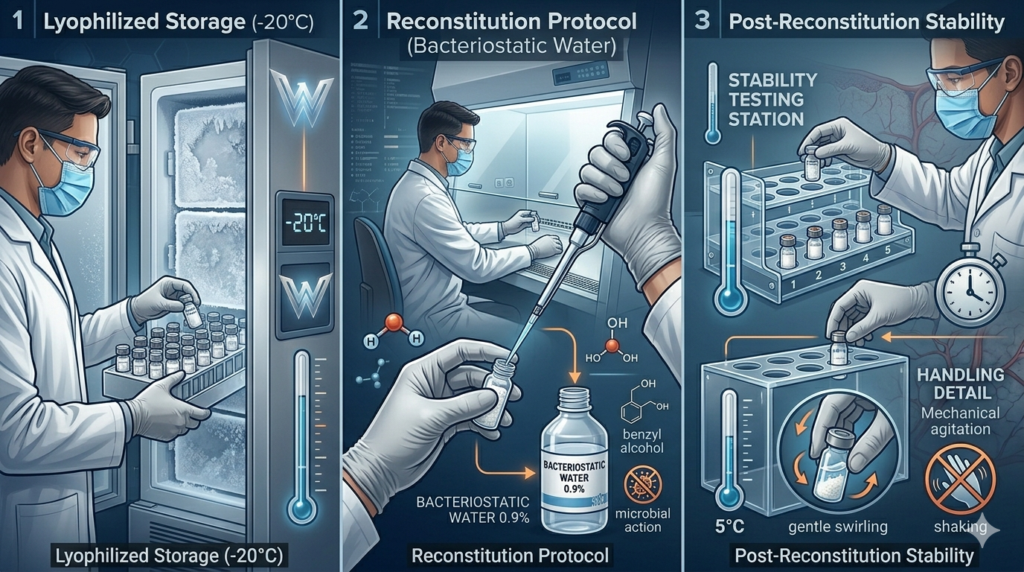
- Lyophilized State: Peptides should be stored at -20°C for long-term storage to prevent structural degradation.
- Reconstitution Protocol: Reconstitution must utilize Bacteriostatic Water (0.9% Benzyl Alcohol) to hinder microbial proliferation over extended observation periods.
- Post-Reconstitution Stability: Following fluid introduction, vials must be maintained at temperatures between 2°C and 8°C. Mechanical agitation should be eliminated; instead, gentle swirling must be applied to completely dissolve the lyophilized cake9.
Conclusion: The Scientific Horizon for the Co-Administration Model
While empirical anecdotal data within private communities heavily promotes the “Wolverine Stack” for rapid healing, peer-reviewed clinical research assessing human subjects remains non-existent. The preclinical evidence verified in laboratory animals demonstrates distinct, complementary avenues of repair. BPC-157 forms the fundamental baseline of localized angiogenesis and growth factor production, while TB-500 facilitates the mechanical migration required for cellular remodeling.
Further controlled clinical exploration is vital to fully establish the metabolic clearance rates, safe dosage ranges, and systemic side-effect profiles before human applications can be scientifically validated.
Tissue Repair & Recovery
Price range: $41.24 through $71.24
Tissue Repair & Recovery
Price range: $41.24 through $71.24
Tissue Repair & Recovery
References
- Yuan, C., et al. (2024). From regeneration to analgesia: The role of BPC-157 and Thymosin Beta-4 in tissue repair and preclinical protocols. Biomedicine & Pharmacotherapy.
- Sikiric, P., et al. (2020). Stable gastric pentadecapeptide BPC 157, Robert’s stomach cytoprotection/adaptive cytoprotection/organoprotection, and Selye’s stress coping response: Progress, achievements, and the future. Gut and Liver, 14(1), 153-167.
- Seiwerth, S., et al. (2021). Stable gastric pentadecapeptide BPC 157 and wound healing. Frontiers in Pharmacology, 12, 627533.
- Chang, C. H., et al. (2011). The promoting effect of pentadecapeptide BPC 157 on tendon healing involves tendon-derived fibroblasts growth and survival. Journal of Orthopaedic Research, 29(3), 346-353.
- Józwiak, M., Bauer, M., Kamysz, W., & Kleczkowska, P. (2025). Multifunctionality and possible medical application of the BPC 157 peptide—Literature and patent review. Pharmaceuticals, 18(2), 185.
- Goldstein, A. L., Hannappel, E., & Kleinman, H. K. (2012). Thymosin β4: Actin-sequestering protein coupled to tissue repair, regeneration and anti-inflammation. World Journal of Biological Chemistry, 3(1), 8-14.
- Philp, D., & Kleinman, H. K. (2010). Thymosin β4: a multifunctional regenerative peptide. Vitamins & Hormones, 84, 411-424.
- Philp, D., et al. (2003). Thymosin β4 and a synthetic peptide fragment promote dermal wound repair. FASEB Journal, 17(14), 2103-2105.
- Brooke, J. W., et al. (2011). Storage stability of lyophilized and reconstituted peptide formulations. Journal of Analytical Chemistry, 66(5), 482-489.