Free Xpresspost Shipping Over $199

30% Off
Black Friday

Wolverine Stack (BPC-157 + TB-500 Blend)
Original price was: $169.99.$169.99 $118.99
In stock

Lab Tested

Ships From BC

2-Day Ship
Overall Purity:
>99% (HPLC Verified)
>99% (HPLC Verified)
Content:
BPC-157 / TB-500 (10mg/10mg)
BPC-157 / TB-500 (10mg/10mg)
Buy Wolverine Blend in Canada for laboratory research. This 20mg dual-peptide formulation combines BPC-157 (10mg) and TB-500 (10mg) in a single lyophilized vial. Also known as the Wolverine Stack, its components are investigated in connective tissue biology, cellular migration, angiogenic signalling, and extracellular matrix research.
Specifications
- Content: 20mg total per vial
- Composition: BPC-157 10mg + TB-500 10mg (1:1 ratio by mass)
- Format: Supplied as a lyophilized peptide blend that may form a solid puck. Reconstitute with a suitable diluent for solution-based research.
- Testing: Refer to available laboratory reports for the peptide components
- BPC-157 Sequence: GEPPPGKPADDAGLV
- Research Use: Laboratory Research Only
Shipping & Handling
Orders ship directly from British Columbia via Canada Post Xpresspost, with tracking provided. Standard delivery typically takes 2–3 business days across Canada.
Wolverine Stack (BPC-157 + TB-500 Blend) – Overview & Research Mechanisms
DUAL-PEPTIDE RESEARCH FORMULATION | COMPOSITION & CELLULAR BIOLOGY
What Is Wolverine Stack?
Wolverine Stack, also known as Wolverine Blend, is a dual-peptide research formulation combining BPC-157 (10mg) and TB-500 (10mg) in a single 20mg vial. These peptides are associated with distinct areas of experimental research involving connective tissue biology, cellular migration, cytoskeletal regulation and vascular signaling.
The formulation provides both research compounds in a 1:1 mass ratio, allowing investigators to explore peptide-associated pathways and potential interactions within controlled laboratory models. Research on the individual peptides provides a scientific foundation for investigating their biological characteristics, while the combined formulation remains an area for further experimental study.
Wolverine Stack Composition
Each Wolverine Stack vial contains a combined 20mg of research peptides, consisting of equal nominal amounts of BPC-157 and TB-500.
Research Mechanisms & Cellular Biology
BPC-157 and thymosin beta-4-related peptides have been investigated in preclinical research examining different aspects of cellular function. Their respective research areas offer opportunities to study how multiple peptide-associated pathways may interact in experimental systems.
Key Research Pathways
BPC-157 — Fibroblast & Connective Tissue Biology
Preclinical investigations have examined BPC-157 in relation to tendon fibroblast migration, FAK-paxillin signaling and experimental connective tissue responses. These studies contribute to research into cellular adhesion, migration and tissue-associated signaling pathways.
TB-500 — Thymosin-Related Cellular Biology
Thymosin beta-4 research has explored actin-associated processes, cellular migration and endothelial biology. These findings provide scientific context for investigating thymosin-related peptide fragments, while the biological properties of individual fragments require their own experimental evaluation.
Combined Research — Peptide Interactions
Dual-peptide experimental designs can compare individual and combined preparations across selected biological endpoints. This approach allows researchers to investigate potential interactions and evaluate whether combined responses differ from those observed with either peptide separately.
Why Study BPC-157 and TB-500 Together?
Combination research offers a framework for investigating compounds associated with different biological processes within the same experimental model. BPC-157 has been studied in relation to fibroblast behavior and connective tissue signaling, while thymosin beta-4 research has examined cytoskeletal organization and cell migration.
Investigating these research areas together may help clarify potential interactions, shared cellular endpoints and differences between individual and combined peptide responses. Such interactions remain experimental, and findings from studies of individual compounds do not establish the effects of the Wolverine Stack formulation.
Wolverine Stack for Laboratory Research in Canada
Researched Peptides supplies Wolverine Stack 20mg for laboratory and scientific research in Canada. The formulation combines BPC-157 and TB-500 in equal nominal amounts, providing a dual-peptide material for controlled experimental investigations.
For additional scientific context, explore our Wolverine Stack Research Guide and BPC-157 vs. TB-500 Comparison to learn more about the compounds and their respective areas of research.
For laboratory and scientific research purposes only. Not intended for human or veterinary use.
Wolverine Stack (BPC-157 + TB-500 Blend) – Technical Specifications
TECHNICAL DATA SHEET | COMPOSITION & LABORATORY INFORMATION
The following specifications summarize the composition and research format of Wolverine Stack 20mg, combining BPC-157 and TB-500 in equal nominal amounts within a single lyophilized vial.
The quantities listed represent the stated formulation. The BPC-157 reference sequence describes that component rather than the complete blend.
Dual-Peptide Composition
Wolverine Stack combines two distinct research peptides in a 1:1 mass ratio. BPC-157 is a synthetic pentadecapeptide investigated in experimental connective tissue and gastrointestinal models. TB-500 is associated with thymosin beta-4-related research involving cellular migration and cytoskeletal biology.
The defined composition allows researchers to investigate both compounds within the same experimental formulation. Analytical interpretation depends on the specific peptide identities, testing methods and laboratory conditions.
Laboratory Storage & Handling
The lyophilized Wolverine Stack should be maintained under controlled laboratory conditions, minimizing unnecessary exposure to heat, moisture and light. Product-specific temperature requirements and validated stability periods should follow applicable technical documentation.
For solution-based laboratory research, solvent compatibility, concentration and storage conditions should be evaluated for the combined formulation. General laboratory preparation and handling information is available in our Research Starter Guide.
Technical Documentation
Visit the Lab Results tab for information about available analytical reports. For formulation-specific documentation or technical inquiries, please contact our team.
Wolverine Stack (BPC-157 + TB-500 Blend) – Laboratory Testing & Results
LABORATORY INFORMATION | PURITY & ANALYTICAL DOCUMENTATION
Independent Analytical Testing
Explore available third-party analytical documentation associated with BPC-157 and TB-500 research peptides. Individual-component reports provide valuable information about the purity and analytical characteristics of submitted samples, supporting transparent laboratory quality assessment.
Wolverine Stack Laboratory Information
Product
Wolverine Stack 20mg
Wolverine Stack 20mg
Laboratory Documentation
Component Reports Available
Component Reports Available
Understanding Peptide Purity Testing
Researched Peptides uses independent third-party analytical testing as part of its product quality assessment. Techniques such as High-Performance Liquid Chromatography (HPLC) and Liquid Chromatography–Tandem Mass Spectrometry (LC-MS/MS) provide analytical information about submitted peptide samples, with the specific findings determined by the testing method used.
For dual-peptide formulations such as Wolverine Stack, individual-component testing provides useful information about BPC-157 and TB-500 research materials. Formulation-specific analysis can further characterize the finished blend, including the composition and analytical properties of the combined preparation.
Our Lab Results page provides access to available analytical reports for selected research peptides. For questions about Wolverine Stack documentation or additional laboratory information, please contact our team.
Wolverine Stack (BPC-157 + TB-500 Blend) – Scientific Research & Studies
PUBLISHED RESEARCH | CONNECTIVE TISSUE & PEPTIDE INTERACTIONS
Wolverine Stack combines BPC-157 and TB-500, two peptides associated with research into connective tissue biology, cellular migration and experimental tissue remodeling. Published investigations have explored BPC-157’s effects on tendon fibroblast signaling, the biological activity of thymosin beta-4-related peptide regions and interactions between BPC-157 and TB-500 in preclinical models. The following studies highlight important findings and limitations across these areas of scientific research.
BPC-157 RESEARCH | 2011
BPC-157 & Tendon Fibroblast Migration
Study: Chang CH et al., Journal of Applied Physiology (2011). The promoting effect of pentadecapeptide BPC 157 on tendon healing involves tendon outgrowth, cell survival, and cell migration.
Research model: Rat tendon explants and cultured tendon fibroblasts examined for cellular outgrowth, migration, survival and associated intracellular signaling.
Findings: Researchers reported increased tendon fibroblast outgrowth, migration and cell survival under selected experimental conditions. These observations were associated with changes in focal adhesion kinase (FAK) and paxillin signaling, pathways involved in cellular attachment and movement.
Research context: This preclinical study investigated BPC-157 individually, contributing to scientific understanding of tendon-cell behavior and connective tissue signaling. It did not evaluate the combined Wolverine Stack formulation.
THYMOSIN-RELATED RESEARCH | 2003
Thymosin Beta-4 Actin-Binding Region & Cellular Migration
Study: Philp D et al., FASEB Journal (2003). The actin binding site on thymosin beta4 promotes angiogenesis.
Research model: Human endothelial-cell migration and adhesion assays, alongside experimental vessel-sprouting models involving thymosin beta-4 and selected synthetic peptide fragments.
Findings: Researchers identified an actin-binding region of thymosin beta-4 associated with endothelial-cell adhesion, migration and experimental angiogenic activity. Synthetic peptides containing the relevant region demonstrated activity in selected laboratory assays, while fragments lacking portions of the motif did not produce comparable responses.
Research context: This study provides mechanistic context for thymosin-related peptide research. Its findings concern thymosin beta-4 and specified experimental fragments and should not automatically be generalized to every material marketed as TB-500 or to a finished BPC-157 + TB-500 blend.
BPC-157 + TB-500 COMBINATION RESEARCH | 2026
BPC-157 & TB-500 in Experimental Achilles Tendon Research
Study: Biçer O et al., Joint Diseases and Related Surgery (2026). Effects of BPC-157 and TB-500 on Achilles tendon healing in rats: A histopathological and biomechanical study.
Research model: Thirty-two male rats divided into four experimental groups: control, BPC-157, TB-500 and combined BPC-157 + TB-500. Following Achilles tendon transection and surgical repair, researchers evaluated biomechanical properties, tissue organization and collagen-related findings over approximately four weeks.
Findings: Investigators observed differences in selected tendon histopathology and extracellular matrix measurements among the experimental groups. TB-500 demonstrated a statistically significant improvement in maximum load to failure compared with controls. Importantly, the combined BPC-157 + TB-500 group did not demonstrate additional benefits over either peptide administered individually in the measured outcomes.
Research context: This exploratory animal study directly investigated BPC-157 and TB-500 together, making it particularly relevant to combination research. However, the study’s limited sample size, single evaluation timepoint and animal model restrict broader conclusions. It did not evaluate the commercial Wolverine Stack product or establish outcomes in humans.
Understanding Wolverine Stack Research Evidence
Published research provides different levels of evidence for the individual peptides and their combination. BPC-157 investigations have examined fibroblast migration and connective tissue signaling, while thymosin beta-4 research has explored actin-associated cellular processes and endothelial biology. The direct 2026 combination study adds experimental evidence involving BPC-157 and TB-500 within the same animal model.
Together, these studies provide a scientific foundation for continued investigation of peptide interactions and connective tissue biology. However, research on individual peptides does not establish synergistic effects when they are combined. The available combination study did not demonstrate additional benefits over the individual compounds in its experimental setting. Further research is required to clarify potential interactions, model-dependent responses and the biological characteristics of combined formulations.
Explore Wolverine Stack Research
Explore our dedicated Wolverine Stack research guide for a deeper examination of BPC-157 and TB-500, their experimental mechanisms, published scientific findings and the evidence surrounding combined peptide research.
Wolverine Stack (BPC-157 + TB-500 Blend) – Frequently Asked Questions
RESEARCHER INQUIRIES | PRODUCT & LABORATORY INFORMATION
Find answers to common questions about Wolverine Stack 20mg, its BPC-157 and TB-500 components, laboratory research applications and technical documentation.
What is the Wolverine Stack?
The Wolverine Stack, also known as Wolverine Blend, is a dual-peptide research formulation containing 10mg BPC-157 and 10mg TB-500 in one lyophilized vial, for a combined nominal content of 20mg. It is intended for controlled laboratory and scientific research.
Why are BPC-157 and TB-500 combined?
BPC-157 and TB-500 are associated with different areas of preclinical research, including connective tissue biology, cellular migration and thymosin-related signaling. A combined preparation allows these compounds to be investigated together in laboratory experiments designed to assess peptide interactions.
What does the 10mg + 10mg composition mean?
Each Wolverine Stack vial contains a stated 10mg of BPC-157 and 10mg of TB-500, for 20mg total peptide content. This represents a 1:1 ratio by mass, not necessarily an equal number of molecules of each peptide.
What is the difference between BPC-157 and TB-500?
BPC-157 is a synthetic 15-amino-acid peptide investigated in connective tissue and gastrointestinal research models. TB-500 is associated with thymosin beta-4-related research, including studies of cellular migration and cytoskeletal biology. Read our BPC-157 vs. TB-500 Comparison for more details.
Has the BPC-157 and TB-500 combination been studied?
Yes. A 2026 preclinical study examined BPC-157, TB-500 and their combination in a rat Achilles tendon model. The combined treatment did not demonstrate additional benefit over the individual compounds in that experiment. Further studies are needed to characterize potential interactions under other experimental conditions.
Is the Wolverine Stack independently laboratory tested?
Independent analytical reports are publicly available for submitted BPC-157 and TB-500 samples. These provide component-specific information and do not automatically establish the purity or composition of the finished Wolverine Stack. Visit our Lab Results page or contact our team for documentation inquiries.
How should the Wolverine Stack be stored?
The lyophilized formulation should be maintained under controlled laboratory storage conditions, minimizing unnecessary exposure to heat, moisture and light. Specific temperatures and validated storage periods should follow the applicable product documentation.
How is the Wolverine Stack prepared for laboratory research?
Preparation depends on the intended analytical or experimental method. Laboratories should establish suitable solvent compatibility, concentration and storage conditions for the combined formulation. General peptide preparation information is available through our Research Starter Guide.
Have a Research Question?
Need help with Wolverine Stack specifications, laboratory documentation or a research-related order inquiry? Our support team can help.
New to Peptide Research?
Explore our Research Starter Guide for basic peptide reconstitution tips, laboratory storage guidance and essential research education.
Wolverine Stack is supplied strictly for laboratory and scientific research purposes. Not intended for human or veterinary use.
Customer Reviews
Add a review
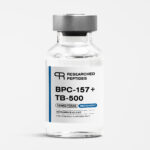 Wolverine Stack (BPC-157 + TB-500 Blend)
Your review
* Review is required
Name
* Name is required
Email
* Email is required
94%
6%
0%
0%
0%
1-5 of 16 reviews
Continue Your Research
Explore additional scientific resources covering BPC-157, TB-500, dual-peptide research and laboratory handling.
Related products
30% Off
Black Friday
Research Supplies
(7) Price range: $2.99 through $8.99
Price range: $2.09 through $6.29
This product has multiple variants. The options may be chosen on the product page Price range: $2.09 through $6.29
30% Off
Black Friday

Research Supplies
(9) Price range: $4.99 through $19.99
Price range: $3.49 through $13.99
This product has multiple variants. The options may be chosen on the product page Price range: $3.49 through $13.99
30% Off
Black Friday
Longevity & Vitality
(6) $59.99
$41.99
This product has multiple variants. The options may be chosen on the product page $41.99
30% Off
Black Friday

good quality. mixed well and works as described
pleased with my order and prompt service
Ordered for my dad with chronic pain from working in trades. He’s feeling much better after using this for just 3 weeks now. Very impressive
Good product but it took 3 days instead of 2 for shipping to NS
First time using it I immediately felt relief in my wrists and slept super well for the first time in a long time