Free Xpresspost Shipping Over $199

30% Off
Black Friday
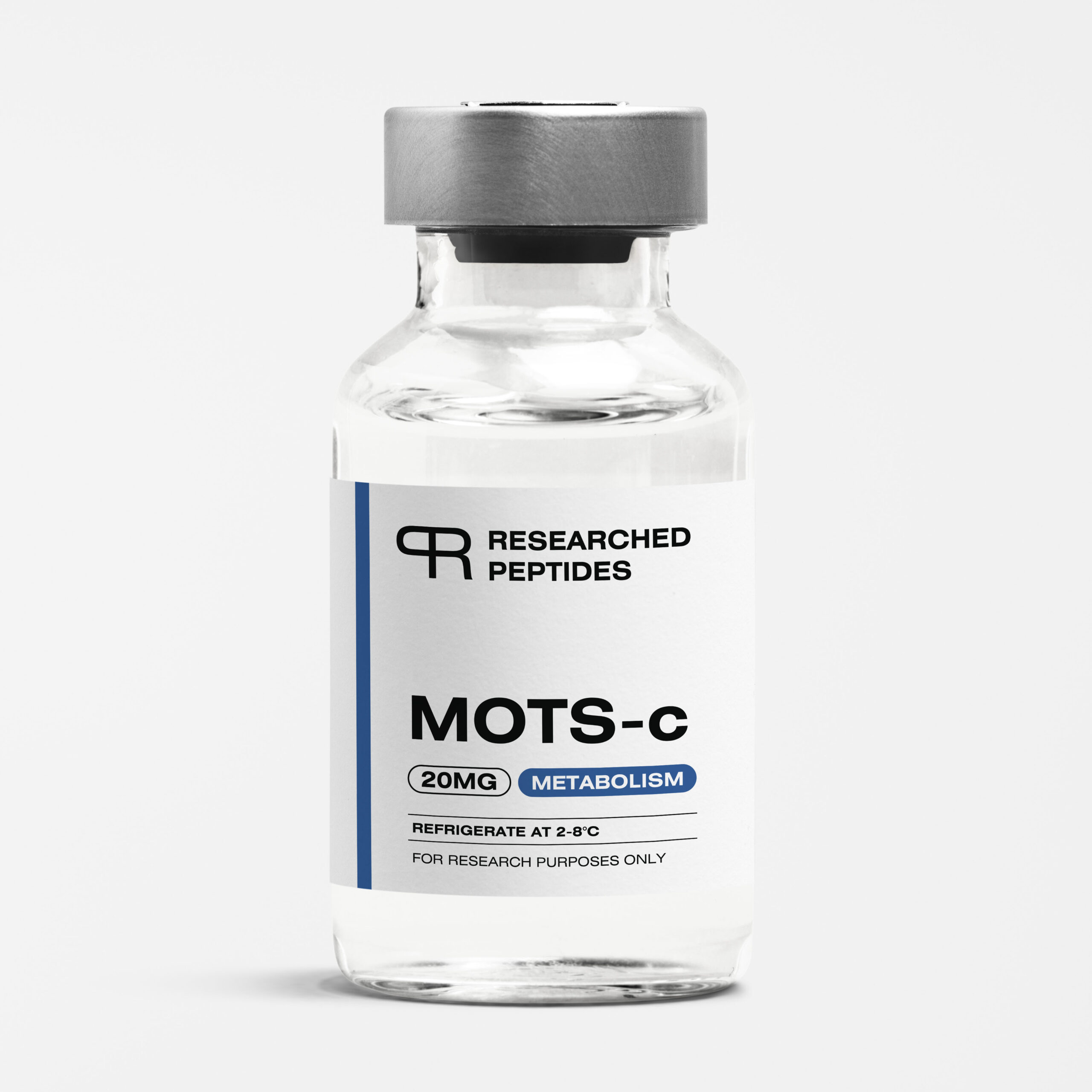
MOTS-c
$99.99
$69.99

Lab Tested

Ships From BC

2-Day Ship
Overall Purity:
99.94% (HPLC Verified)
99.94% (HPLC Verified)
Buy MOTS-c 20mg in Canada for laboratory research. MOTS-c is a mitochondrial-derived peptide studied for its involvement in cellular energy regulation, AMPK signalling, glucose metabolism, and metabolic stress responses.
Specifications
- Content: 20mg per vial
- Format: Supplied as a solid, lyophilized puck. Reconstitute with a suitable diluent, such as BAC Water, for solution-based research.
- Purity: 99.94% (HPLC Verified, tested sample)
- Testing: Independent HPLC-UV Analysis
- Molecular Formula: C101H152N28O22S2
- Research Use: Laboratory Research Only
Shipping & Handling
Orders ship directly from British Columbia via Canada Post Xpresspost, with tracking provided. Standard delivery typically takes 2–3 business days across Canada.
MOTS-c Research Peptide – Overview & Mechanism
MITOCHONDRIAL SIGNALING | COMPOUND RESEARCH OVERVIEW
MOTS-c (mitochondrial open reading frame of the 12S rRNA-c) is a naturally occurring 16-amino-acid peptide encoded within the mitochondrial genome. It belongs to the mitochondrial-derived peptide (MDP) family and is investigated for its involvement in metabolic regulation, cellular stress responses and communication between mitochondria and the nucleus.
Available as a 20mg lyophilized research peptide, MOTS-c has been studied in experimental models examining AMPK-related signaling, glucose metabolism, skeletal muscle energy regulation and mitochondrial-nuclear communication. Its role in coordinating responses to metabolic stress makes it a subject of interest in cellular metabolism and mitochondrial biology.
Mechanism of Action
Unlike conventional peptides encoded by nuclear DNA, MOTS-c originates from a short open reading frame within the mitochondrial 12S rRNA region. Research suggests that it participates in cellular signaling networks that connect mitochondrial metabolic conditions with broader cellular responses.
In experimental models, MOTS-c has been associated with changes in the folate cycle and purine metabolism, leading to the accumulation of AICAR and activation of AMP-activated protein kinase (AMPK). AMPK is an important cellular energy sensor that helps coordinate responses to changing energy availability.
Additional cell-based investigations have shown that MOTS-c can relocate to the nucleus under metabolic stress and participate in the regulation of stress-responsive gene expression. These observations provide a mechanistic basis for studying mitochondrial-to-nuclear signaling.
Key MOTS-c Research Pathways
AMPK — Cellular Energy Signaling
Investigated for AMPK-associated responses to changes in cellular energy availability and metabolic stress.
Folate & Purine Metabolism
Experimental studies have linked MOTS-c activity with one-carbon metabolism, purine biosynthesis and changes in AICAR availability.
Mitochondrial-Nuclear Communication
Cellular research has examined the movement of MOTS-c into the nucleus during metabolic stress and its association with adaptive gene expression.
Skeletal Muscle Metabolism
Preclinical studies investigate MOTS-c in relation to skeletal muscle glucose utilization, metabolic adaptation and experimental exercise responses.
Research Applications
MOTS-c is investigated across several areas of experimental metabolic and mitochondrial research:
- Metabolic homeostasis: Experimental regulation of glucose metabolism and energy balance.
- Mitochondrial signaling: Communication between mitochondrial and nuclear cellular pathways.
- AMPK activation: Cellular energy sensing and metabolic stress responses.
- Exercise-related research: Skeletal muscle adaptation and physical performance observations in animal models.
- Cellular aging research: Age-associated changes in metabolic signaling and stress adaptation.
Much of the experimental evidence involving MOTS-c comes from cultured cells and animal models. These findings help explain potential biological functions but do not establish equivalent effects, therapeutic benefits or clinical efficacy in humans.
MOTS-c for Laboratory Research in Canada
Researched Peptides supplies MOTS-c 20mg in Canada for laboratory and scientific research. Available independent analytical documentation includes HPLC-UV purity and content testing for a submitted MOTS-c sample. Researchers can review the applicable report through the Lab Results tab.
For deeper scientific context, explore our MOTS-c Mitochondrial Research Guide and MOTS-c Exercise & Metabolic Research article.
For laboratory and scientific research purposes only. Not intended for human or veterinary use.
| Strength | 20mg, 20mg – 6 Vials (Master Set) |
|---|
MOTS-c Research Peptide – Molecular Specifications
TECHNICAL DATA SHEET | MOLECULAR & LABORATORY INFORMATION
The following technical specifications summarize the molecular identity and product format of MOTS-c for scientific reference and laboratory research planning.
| Parameter | Specification |
|---|---|
| Compound | MOTS-c |
| Classification | Mitochondrial-Derived Peptide (MDP) |
| Strength | 20mg per vial |
| Peptide Length | 16 Amino Acids |
| Molecular Formula | C101H152N28O22S2 |
| Molecular Weight | 2174.6 g/mol |
| CAS Number | 1627580-64-6 |
| Peptide Sequence | Met-Arg-Trp-Gln-Glu-Met-Gly-Tyr-Ile-Phe-Tyr-Pro-Arg-Lys-Leu-Arg |
| Physical Form | White Lyophilized Powder |
| Research Areas | Mitochondrial Signaling, AMPK, Metabolic Homeostasis |
Molecular formula, mass and CAS number refer to the free peptide reference structure. The supplied salt or counterion composition, if applicable, should be established from product-specific documentation.
Mitochondrial Origin & Structure
MOTS-c is encoded by a short open reading frame within the mitochondrial 12S ribosomal RNA region. Its 16-amino-acid sequence distinguishes it from conventional nuclear-encoded signaling peptides.
Its mitochondrial genetic origin has made MOTS-c an important subject in research examining how mitochondrial signals influence cellular metabolism, stress adaptation and nuclear gene expression.
Laboratory Storage & Handling
Lyophilized MOTS-c should be maintained under controlled laboratory storage conditions, with unnecessary exposure to moisture, light and elevated temperatures minimized. Exact storage requirements should follow applicable technical documentation and institutional procedures.
For solution-based research, laboratories should establish appropriate solvent compatibility, preparation conditions and storage procedures for their intended experimental methods. Chemical stability following reconstitution can depend on solvent composition, temperature, concentration and time.
For general peptide preparation and handling concepts, refer to our Research Starter Guide and Peptide Stability & Storage Guide.
Technical Documentation
For analytical purity, content results and sample-specific testing information, review the Lab Results tab. For additional documentation, contact our team.
MOTS-c Research Peptide – HPLC Testing & Lab Results
LABORATORY INFORMATION | PURITY & ANALYTICAL DOCUMENTATION
Independent Analytical Testing
Review available third-party analytical documentation for MOTS-c 20mg. Independent HPLC-UV testing has been performed on a submitted MOTS-c sample, providing documented purity and content findings to support the evaluation of research peptide quality.
Understanding Peptide Purity Testing
Researched Peptides uses independent third-party analytical testing as part of its product quality assessment. High-Performance Liquid Chromatography with Ultraviolet Detection (HPLC-UV) is a laboratory technique used to separate and measure components within a submitted sample, helping researchers assess peptide purity and identify the presence of detectable impurities.
For the submitted MOTS-c 20mg sample, the independent laboratory reported 99.94% HPLC-UV purity and documented content analysis. These analytical findings provide valuable insight into the tested material’s purity and composition, supporting transparent product quality assessment for laboratory research.
The independent Certificate of Analysis provides the documented purity and content findings for the submitted MOTS-c sample. For questions about MOTS-c testing or additional laboratory information, please contact our team.
MOTS-c Peptide – Scientific Research & Studies
PUBLISHED RESEARCH | MITOCHONDRIAL & METABOLIC SIGNALING
MOTS-c is a mitochondrial-encoded peptide investigated for its involvement in cellular metabolism, metabolic stress responses and mitochondrial-nuclear communication. Published research has explored its interactions with AMPK signaling, intracellular gene regulation and skeletal muscle biology. The following peer-reviewed studies highlight important discoveries across these areas of scientific investigation.
PRECLINICAL METABOLIC RESEARCH | 2015
MOTS-c & Metabolic Homeostasis
Study: Lee C et al., Cell Metabolism (2015). The mitochondrial-derived peptide MOTS-c promotes metabolic homeostasis and reduces obesity and insulin resistance.
Research model: Cellular experiments and mouse models investigating the biological activity of mitochondrial-encoded MOTS-c, metabolic regulation and insulin-associated signaling pathways.
Findings: Researchers identified connections between MOTS-c, the folate-purine metabolic pathway and AMP-activated protein kinase (AMPK) signaling. Experimental changes in AICAR availability and AMPK activation were associated with metabolic responses, while mouse investigations demonstrated changes in insulin sensitivity and metabolic homeostasis.
Research context: This foundational study characterized MOTS-c as a mitochondrial-derived signaling peptide and established important preclinical evidence linking its activity to cellular metabolic regulation.
CELLULAR SIGNALING RESEARCH | 2018
MOTS-c Nuclear Translocation During Metabolic Stress
Study: Kim KH et al., Cell Metabolism (2018). The Mitochondrial-Encoded Peptide MOTS-c Translocates to the Nucleus to Regulate Nuclear Gene Expression in Response to Metabolic Stress.
Research model: Cellular experiments examining the intracellular localization of MOTS-c, AMPK-dependent signaling and changes in nuclear gene expression during metabolic stress.
Findings: Researchers observed that metabolic stress triggered AMPK-dependent translocation of MOTS-c into the nucleus. This movement was associated with changes in stress-responsive gene expression, providing evidence that a mitochondrial-encoded peptide can participate in nuclear regulatory processes.
Research context: The findings expanded the understanding of mitochondrial-nuclear communication and highlighted MOTS-c as a subject of interest in cellular adaptation and metabolic stress signaling.
EXERCISE & PRECLINICAL RESEARCH | 2021
MOTS-c, Exercise Signaling & Skeletal Muscle Adaptation
Study: Reynolds JC et al., Nature Communications (2021). MOTS-c is an exercise-induced mitochondrial-encoded regulator of age-dependent physical decline and muscle homeostasis.
Research model: Experimental mouse and skeletal muscle-cell models, alongside measurements of naturally occurring MOTS-c in human skeletal muscle and circulation surrounding exercise.
Findings: Researchers observed increased endogenous MOTS-c expression in human skeletal muscle and circulation following exercise. Separate mouse experiments reported changes in skeletal muscle metabolism, exercise capacity and age-associated physical performance following experimental MOTS-c administration.
Research context: The study connected MOTS-c with exercise-associated mitochondrial signaling. Human observations examined endogenous MOTS-c responses, while administration-related findings were obtained from preclinical models.
Understanding the Research Evidence
Published research has established MOTS-c as a mitochondrial-encoded peptide involved in experimental investigations of metabolic regulation, cellular stress responses and mitochondrial-nuclear signaling. The studies above illustrate its relationships with AMPK activity, adaptive gene expression and skeletal muscle biology.
The evidence includes cellular experiments, animal studies and human observations of naturally occurring MOTS-c during exercise. Together, these findings provide a foundation for continued scientific investigation, while the effects of administered MOTS-c in humans remain to be established through appropriate clinical research.
Explore MOTS-c Research in Greater Detail
Explore our dedicated research guide for a closer look at MOTS-c, exercise-associated signaling, mitochondrial metabolism and experimental findings involving skeletal muscle biology.
MOTS-c Research Peptide – Frequently Asked Questions
RESEARCHER INQUIRIES | PRODUCT & LABORATORY INFORMATION
Find answers to common questions about MOTS-c, mitochondrial signaling, experimental research and laboratory documentation.
What is MOTS-c?
MOTS-c is a naturally occurring 16-amino-acid mitochondrial-derived peptide encoded within the mitochondrial 12S rRNA region. It is investigated for its role in metabolic signaling, cellular stress responses and communication between mitochondria and the nucleus.
Why is MOTS-c studied in laboratory research?
Researchers investigate MOTS-c in relation to AMPK signaling, glucose metabolism, mitochondrial communication, skeletal muscle metabolism and experimental responses to metabolic stress. Most intervention findings come from cellular and animal research.
How does MOTS-c interact with AMPK?
In experimental models, MOTS-c has been associated with changes in folate and purine metabolism that increase AICAR availability and promote AMPK activation. AMPK is an important cellular energy sensor involved in metabolic adaptation.
Is MOTS-c an exercise-related peptide?
MOTS-c has been investigated in exercise and skeletal muscle research. A 2021 study reported changes in endogenous MOTS-c following exercise in human participants, while separate mouse experiments examined physical performance and metabolic adaptation. These findings do not establish performance benefits from administered MOTS-c in humans.
What strength of MOTS-c is available?
Researched Peptides offers MOTS-c in a 20mg lyophilized vial format for laboratory and scientific research. Current product details are listed on this page.
Is MOTS-c independently laboratory tested?
Yes. An independent laboratory Certificate of Analysis for a submitted MOTS-c sample reports 99.94% purity using HPLC-UV analysis, along with measured content information. The report is available through the Lab Results tab. Results apply to the tested sample and do not establish that every batch has identical specifications.
How should MOTS-c be stored?
Lyophilized MOTS-c should be maintained under controlled laboratory storage conditions, with unnecessary heat, moisture and light exposure minimized. Product-specific storage conditions and solution stability periods should be established from applicable technical documentation and institutional laboratory procedures.
Can MOTS-c be prepared for laboratory experiments?
MOTS-c may be incorporated into solution-based experimental protocols where appropriate. Solvent compatibility, preparation conditions and storage should be established for the intended research method. Compatibility with any particular diluent, including bacteriostatic water, should not be assumed without supporting technical documentation.
Have a Research Question?
Need help with MOTS-c specifications, laboratory documentation or a research-related order inquiry? Our support team can help.
New to Peptide Research?
Explore our Research Starter Guide for basic peptide reconstitution tips, laboratory storage guidance and essential research education.
MOTS-c is supplied strictly for laboratory and scientific research purposes. Not intended for human or veterinary use.
Customer Reviews
Add a review
 MOTS-c
Your review
* Review is required
Name
* Name is required
Email
* Email is required
88%
12%
0%
0%
0%
1-5 of 17 reviews
Continue Your Research
Explore additional research peptides and educational resources covering MOTS-c, mitochondrial signaling, metabolic regulation, and laboratory research.
Related products
30% Off
Black Friday
Longevity & Vitality
(2) $119.99
$83.99
This product has multiple variants. The options may be chosen on the product page $83.99
30% Off
Black Friday
Metabolic Support
(8) Price range: $74.99 through $124.99
Price range: $52.49 through $87.49
This product has multiple variants. The options may be chosen on the product page Price range: $52.49 through $87.49
30% Off
Black Friday

Research Supplies
(9) Price range: $4.99 through $19.99
Price range: $3.49 through $13.99
This product has multiple variants. The options may be chosen on the product page Price range: $3.49 through $13.99
30% Off
Black Friday

Delivered very fast – within 2 days after ordered. High quality product. Very satisfied customer and will continue to use their products.
Honestly the best and most amazing service ever! So helpful and extremely attentive. The shipping is quick as well! So far I’m loving my order. Thanks guys