Free Xpresspost Shipping Over $199

30% Off
Black Friday
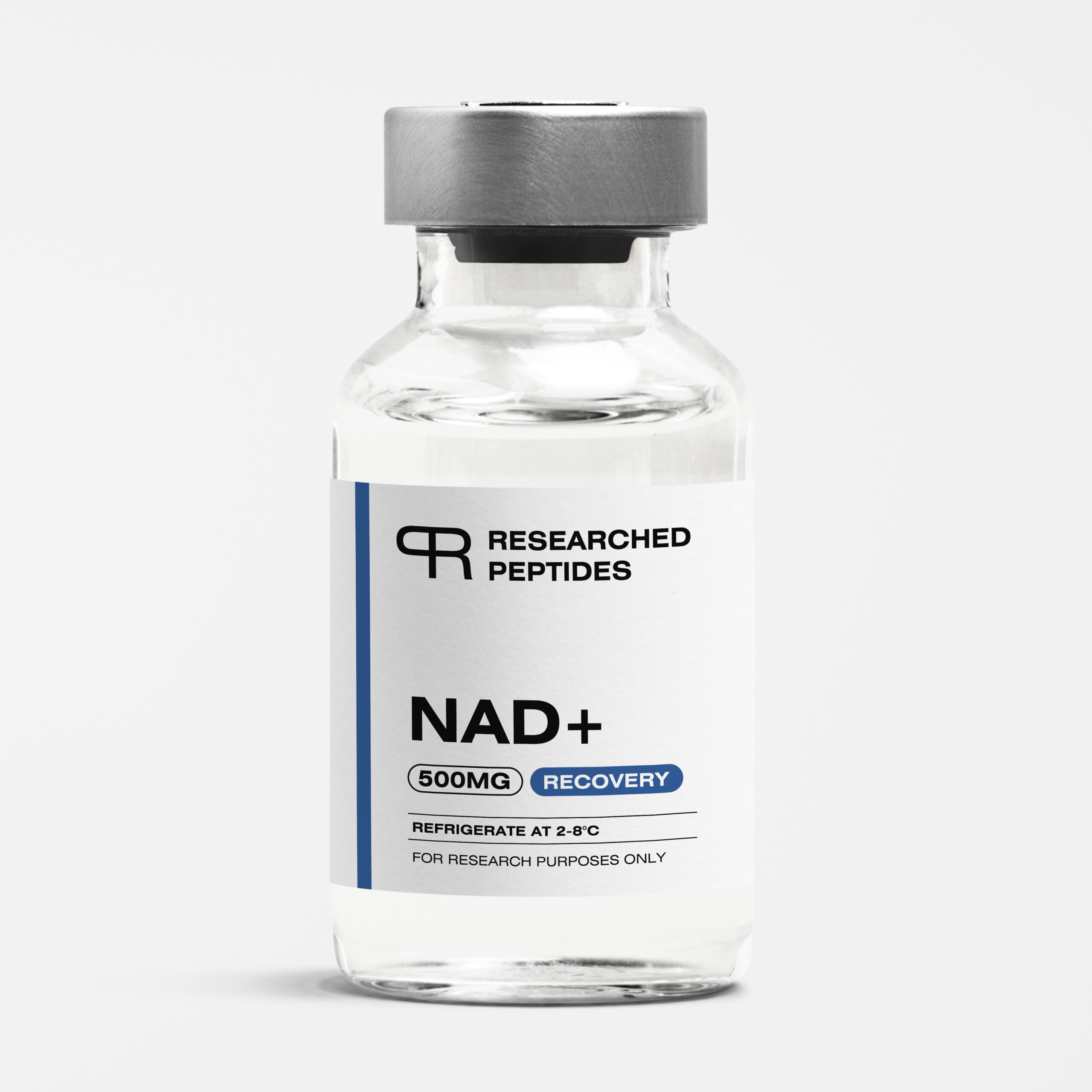
NAD+
$119.99
$83.99

Lab Tested

Ships From BC

2-Day Ship
Overall Purity:99.5% (HPLC Verified)
Buy NAD+ 500mg in Canada for laboratory research. Nicotinamide adenine dinucleotide (NAD+) is an essential cellular coenzyme involved in energy metabolism, redox reactions and mitochondrial function. NAD+ is also widely studied in DNA repair, sirtuin signalling and cellular ageing research. For laboratory and scientific research only.
Specifications
- Content: 500mg per vial
- Format: Supplied as a solid, lyophilized puck. Reconstitute with a suitable diluent, such as BAC Water, for solution-based research.
- Purity: 99.5% (HPLC Verified, tested sample)
- Testing: HPLC Analysis
- Molecular Formula: C21H27N7O14P2
- Research Use: Laboratory Research Only
Shipping & Handling
Orders ship directly from British Columbia via Canada Post Xpresspost, with tracking provided. Standard delivery typically takes 2–3 business days across Canada.
NAD+ (Nicotinamide Adenine Dinucleotide) – Overview & Cellular Mechanisms
CELLULAR METABOLISM | COENZYME RESEARCH OVERVIEW
NAD+ (Nicotinamide Adenine Dinucleotide) is an essential cellular coenzyme involved in energy metabolism, oxidation-reduction (redox) reactions and numerous enzyme-dependent signaling pathways. Found throughout living cells, NAD+ supports biochemical reactions central to mitochondrial function, cellular respiration and metabolic regulation.
Available in a 500mg lyophilized format, NAD+ is investigated in laboratory research examining mitochondrial bioenergetics, cellular NAD+ homeostasis, sirtuin activity, DNA damage responses and age-associated changes in metabolism. Unlike peptide-based research compounds, NAD+ is a dinucleotide coenzyme with established roles in cellular biochemistry.
How Does NAD+ Work?
NAD+ participates in cellular metabolism through two major biochemical functions: electron transfer and NAD+-dependent enzyme activity.
During redox reactions, NAD+ accepts electrons and is converted into its reduced form, NADH. NADH can subsequently transfer electrons into cellular respiratory pathways, including the mitochondrial electron transport chain, contributing to the processes that support ATP synthesis.
Separately, NAD+ acts as a substrate for several enzyme families, including sirtuins, poly(ADP-ribose) polymerases (PARPs) and CD38. These enzymes participate in cellular signaling, protein modification, DNA damage responses and NAD+ metabolism.
Key NAD+ Research Pathways
NAD+/NADH — Cellular Redox Metabolism
The interconversion of NAD+ and NADH supports electron transfer during glycolysis, the citric acid cycle and mitochondrial energy metabolism.
Sirtuins — NAD+-Dependent Signaling
Sirtuins are NAD+-dependent enzymes involved in protein deacylation and the regulation of metabolic adaptation, cellular stress responses and gene expression.
PARPs — DNA Damage Response
Poly(ADP-ribose) polymerases use NAD+ to support ADP-ribosylation reactions involved in DNA damage signaling and repair-associated processes.
CD38 — NAD+ Consumption & Regulation
CD38 is an NAD+-consuming enzyme investigated for its role in intracellular NAD+ availability, calcium-related signaling and age-associated metabolic changes.
Research Applications
NAD+ is extensively investigated across cellular and molecular biology, including:
- Mitochondrial bioenergetics: Redox balance, oxidative metabolism and ATP-generating pathways.
- Cellular aging research: Changes in NAD+ metabolism, enzyme activity and cellular homeostasis across experimental aging models.
- DNA repair signaling: NAD+-dependent PARP activity and cellular responses to DNA damage.
- Metabolic regulation: Sirtuin-associated pathways and cellular adaptation to nutrient and energy availability.
- NAD+ homeostasis: Biosynthesis, salvage pathways, consumption and intracellular compartmentalization.
Although NAD+ metabolism is closely associated with aging biology, changes observed in cells and animal models do not establish that increasing NAD+ produces anti-aging or therapeutic benefits in humans. Experimental outcomes depend on the research model, method of intervention and endpoints measured.
NAD+ for Laboratory Research in Canada
Researched Peptides supplies NAD+ 500mg in Canada for laboratory and scientific research applications. The company uses independent analytical testing to support product quality assessment, with results interpreted according to the methods and samples covered by the available documentation.
For a broader discussion of NAD+ biology, scientific findings and current areas of investigation, explore our NAD+ Research Guide.
For laboratory and scientific research purposes only. Not intended for human or veterinary use.
| Strength | 500mg, 500mg – 6 Vials (Master Set) |
|---|
NAD+ Molecular Specifications & Technical Data
TECHNICAL DATA SHEET | MOLECULAR & LABORATORY INFORMATION
The following technical specifications describe nicotinamide adenine dinucleotide in its oxidized form (NAD+), including its molecular characteristics and laboratory research format.
| Parameter | Specification |
|---|---|
| Compound | Nicotinamide Adenine Dinucleotide (NAD+) |
| Classification | Dinucleotide Coenzyme |
| Strength | 500mg per vial |
| Chemical Form | Oxidized NAD+ (reference structure) |
| Molecular Formula | C21H27N7O14P2 |
| Molecular Weight | 663.43 g/mol |
| CAS Number | 53-84-9 |
| Physical State | Lyophilized Powder |
| Research Applications | Redox Biology, Mitochondrial Metabolism, NAD+-Dependent Enzymes |
The molecular formula, molecular weight and CAS number refer to the identified NAD+ reference structure. Exact supplied salt, hydrate or counterion composition should be confirmed from product-specific documentation where relevant.
NAD+ vs. NADH
NAD+ and NADH represent the oxidized and reduced forms of the nicotinamide adenine dinucleotide coenzyme system. NAD+ accepts electrons during oxidation reactions, while NADH carries reducing equivalents that can be transferred to other biochemical processes.
The NAD+/NADH ratio is commonly measured in experimental research as an indicator of cellular redox conditions. This ratio varies across cellular compartments and metabolic states.
Laboratory Storage & Handling
NAD+ research material should be stored under controlled laboratory conditions according to the applicable supplier documentation and institutional procedures. Minimize unnecessary exposure to moisture, excessive heat and light during storage and handling.
When prepared in solution, NAD+ stability can be influenced by temperature, pH, solvent composition and storage duration. Laboratories should establish preparation and storage procedures appropriate to the intended analytical method rather than assuming a universal solution stability period.
For general laboratory handling guidance, see our Peptide Stability & Storage Guide. Peptide-specific guidance should not automatically be applied to NAD+ without confirming compatibility.
Technical Documentation
For information about analytical purity, measured content or documentation for a particular sample, review the Lab Results tab or contact our team.
NAD+ (Nicotinamide Adenine Dinucleotide) – HPLC Testing & Lab Results
LABORATORY INFORMATION | PURITY & ANALYTICAL DOCUMENTATION
Independent Analytical Testing
Review available analytical information for NAD+ (Nicotinamide Adenine Dinucleotide) 500mg. The reported HPLC purity result provides sample-specific information to support the evaluation of laboratory research material quality.
Understanding NAD+ Purity Testing
Researched Peptides uses independent third-party analytical testing as part of its product quality assessment. High-Performance Liquid Chromatography (HPLC) is a laboratory technique used to separate and measure components within a submitted sample, helping researchers assess NAD+ purity and identify the presence of detectable impurities.
HPLC purity testing provides valuable insight into NAD+ quality by measuring the relative purity of the analyzed sample. Combined with transparent laboratory documentation, these results help researchers evaluate analytical quality and make informed decisions when selecting research materials in Canada.
Our Lab Results page provides access to available analytical reports for selected research materials. For questions about NAD+ documentation or additional laboratory information, please contact our team.
NAD+ – Scientific Research & Studies
PUBLISHED RESEARCH | CELLULAR METABOLISM & NAD+ BIOLOGY
Nicotinamide adenine dinucleotide (NAD+) is an essential cellular coenzyme involved in energy metabolism, redox reactions and NAD+-dependent enzyme activity. Published research continues to investigate how NAD+ is regulated, transported into mitochondria and involved in cellular processes such as nucleotide metabolism and DNA replication. The following peer-reviewed studies highlight important discoveries in NAD+ biology.
PRECLINICAL RESEARCH | 2016
CD38 and Age-Associated NAD+ Decline
Study: Camacho-Pereira J et al., Cell Metabolism (2016).
Research model: Experimental mouse models examining age-associated changes in NAD+ metabolism, CD38 activity and mitochondrial function, alongside supporting human tissue observations.
Findings: Researchers identified increased CD38 activity as an important contributor to NAD+ decline in aging mice. Their experiments also linked CD38-mediated NAD+ regulation with mitochondrial function and SIRT3-associated pathways, contributing to the understanding of cellular NAD+ homeostasis during aging.
Research context: The study primarily investigated mechanisms of NAD+ regulation in preclinical models, rather than the effects of externally supplied NAD+.
CELLULAR RESEARCH | 2020
Identification of a Mitochondrial NAD+ Transporter
Study: Luongo TS et al., Nature (2020). SLC25A51 is a mammalian mitochondrial NAD+ transporter.
Research model: Mammalian cell systems using genetic and biochemical approaches to investigate how NAD+ is transported into mitochondria and maintained within mitochondrial coenzyme pools.
Findings: Researchers identified SLC25A51 as a mammalian mitochondrial NAD+ transporter. Experimental changes in SLC25A51 expression altered mitochondrial NAD+ availability, establishing an important connection between cellular transport mechanisms and mitochondrial metabolism.
Research context: This investigation focused on intracellular NAD+ transport and mitochondrial biology in experimental cell systems.
CELLULAR RESEARCH | 2023
NAD+ Availability and Genomic DNA Replication
Study: NAD+ regulates nucleotide metabolism and genomic DNA replication. Nature Cell Biology (2023).
Research model: Cultured human cell systems investigating the relationship between intracellular NAD+ availability, nucleotide metabolism and genomic DNA replication.
Findings: Researchers observed that experimental changes in NAD+ availability influenced nucleotide metabolism and DNA replication dynamics. These findings expanded the understanding of NAD+ biology beyond its established role in cellular redox reactions, highlighting additional connections between coenzyme availability and genomic processes.
Research context: The findings were obtained from controlled cellular experiments examining intracellular NAD+ regulation and DNA replication processes.
Understanding the Research Evidence
NAD+ is an essential coenzyme involved in cellular energy metabolism, redox reactions and NAD+-dependent signaling. The studies above expand our understanding of how NAD+ is regulated, transported into mitochondria and involved in nucleotide metabolism and DNA replication.
These findings represent established biochemical knowledge alongside discoveries from cellular and preclinical research. Results involving changes in NAD+ availability should be interpreted within their experimental context and should not be assumed to establish clinical effects from externally supplied NAD+.
Explore NAD+ Research in Greater Detail
Explore our dedicated research guide for a more detailed examination of NAD+ metabolism, mitochondrial biology, enzyme systems and emerging areas of scientific investigation.
NAD+ Frequently Asked Questions
RESEARCHER INQUIRIES | PRODUCT & LABORATORY INFORMATION
Find answers to common questions about NAD+ research, cellular metabolism, molecular specifications and laboratory documentation.
What is NAD+ (Nicotinamide Adenine Dinucleotide)?
NAD+ is a naturally occurring cellular coenzyme essential to numerous biochemical reactions. It participates in redox metabolism, mitochondrial energy production and NAD+-dependent enzyme pathways, including sirtuins and PARPs.
Is NAD+ a peptide?
No. NAD+ is a dinucleotide coenzyme, not a peptide. It is composed of two linked nucleotide components and functions as an electron carrier and enzyme substrate in cellular metabolism. Researched Peptides supplies NAD+ as a laboratory research material.
Why is NAD+ studied in laboratory research?
Researchers investigate NAD+ for its roles in mitochondrial metabolism, redox balance, sirtuin activity, DNA damage responses, cellular aging pathways and the regulation of NAD+ availability within different cellular compartments.
What is the difference between NAD+ and NADH?
NAD+ is the oxidized form of nicotinamide adenine dinucleotide, while NADH is its reduced form. They participate in electron-transfer reactions essential to cellular metabolism. The NAD+/NADH ratio is frequently studied as an indicator of cellular redox conditions.
What strength of NAD+ is available?
Researched Peptides offers NAD+ in a 500mg lyophilized vial format intended for laboratory and scientific research. Current product details and availability are displayed on this page.
Is NAD+ independently laboratory tested?
Researched Peptides uses independent third-party analytical testing. The product page currently lists an HPLC purity result of 99.5% for NAD+. Researchers should consult the applicable laboratory report to confirm the methods, sample identification and scope of the testing. Additional documentation can be requested through our support team.
Can NAD+ be prepared in laboratory solutions?
NAD+ is used in prepared solutions for various biochemical and analytical applications. Appropriate solvent selection, concentration, pH and storage conditions depend on the experimental protocol. Compatibility with a particular diluent, including bacteriostatic water, should not be assumed without supporting technical information.
How should NAD+ be stored?
NAD+ research material should be maintained under controlled laboratory storage conditions according to applicable product documentation. Solution stability may depend on temperature, pH, solvent composition and storage duration. No universal post-reconstitution stability period should be assumed.
Have a Research Question?
Need help with NAD+ specifications, laboratory documentation or a research-related order inquiry? Our support team can help.
New to Peptide Research?
Explore our Research Starter Guide for basic peptide reconstitution tips, laboratory storage guidance, and essential research education.
NAD+ is supplied strictly for laboratory and scientific research purposes. Not intended for human or veterinary use.
Customer Reviews
Add a review
 NAD+
Your review
* Review is required
Name
* Name is required
Email
* Email is required
82%
18%
0%
0%
0%
1-5 of 11 reviews
Continue Your Research
Explore additional research materials and educational resources covering NAD+ biology, cellular metabolism, and laboratory handling.
Related products
30% Off
Black Friday
30% Off
Black Friday
Metabolic Support
(8) $99.99
$69.99
This product has multiple variants. The options may be chosen on the product page $69.99
30% Off
Black Friday
Metabolic Support
(8) Price range: $74.99 through $124.99
Price range: $52.49 through $87.49
This product has multiple variants. The options may be chosen on the product page Price range: $52.49 through $87.49
30% Off
Black Friday
Research Supplies
(9) Price range: $4.99 through $19.99
Price range: $3.49 through $13.99
This product has multiple variants. The options may be chosen on the product page Price range: $3.49 through $13.99
Delivered very fast – within 2 days after ordered. High quality product. Very satisfied customer and will continue to use their products.
Honestly the best and most amazing service ever! So helpful and extremely attentive. The shipping is quick as well! So far I’m loving my order. Thanks guys
professional! fast and thoughtful service